
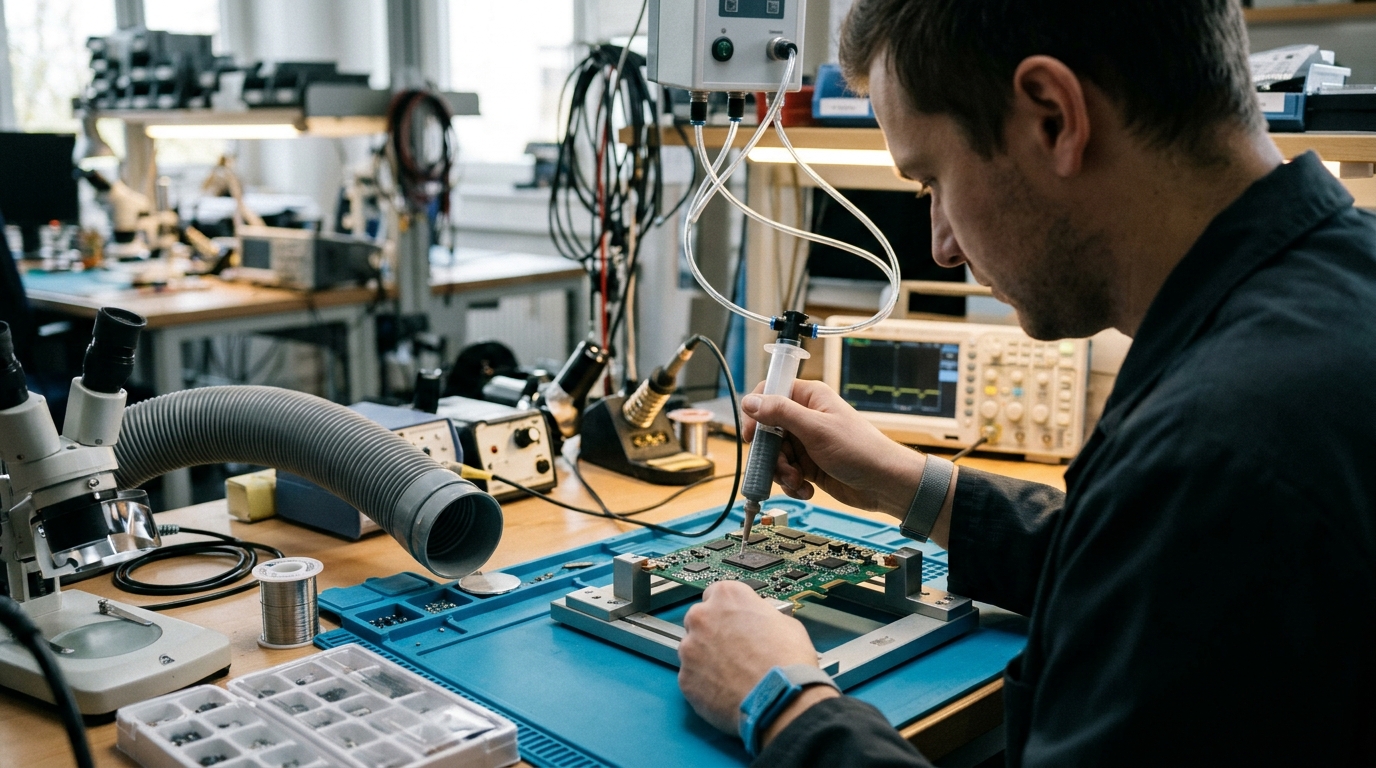
Precision dispensing systems are critical for German electronics workshops because they ensure consistent application of adhesives, sealants, and thermal compounds. PK Elektronik Vertriebs GmbH provides specialized tools for these tasks. Understanding the technical requirements helps you select the right equipment for your production line. This guide outlines the key factors to consider before implementing these systems.
Understanding Dispensing Technologies
Material Compatibility and Viscosity
Material compatibility is a primary factor in selecting a dispensing system. Different adhesives and sealants have varying viscosities and chemical properties. High-viscosity materials require more pressure to dispense accurately. Low-viscosity materials may require slower flow rates to prevent splashing. The nozzle size must match the material and the application area. A mismatch can lead to clogging or inconsistent application. Always check the manufacturer's recommendations for nozzle size and pressure settings. This ensures reliable performance and reduces waste.
Accuracy and Repeatability Requirements
Accuracy and repeatability are essential for high-quality electronics assembly. The system must deliver the same volume of material to every component. Variations in volume can affect the performance and reliability of the final product. Modern dispensing systems use closed-loop control to maintain accuracy. They monitor pressure and flow rate in real time. This allows for automatic adjustments to compensate for material changes. The level of accuracy required depends on the specific application. For example, underfill dispensing requires very high precision. General potting may allow for slightly more variation.
Integration with Existing Workflows
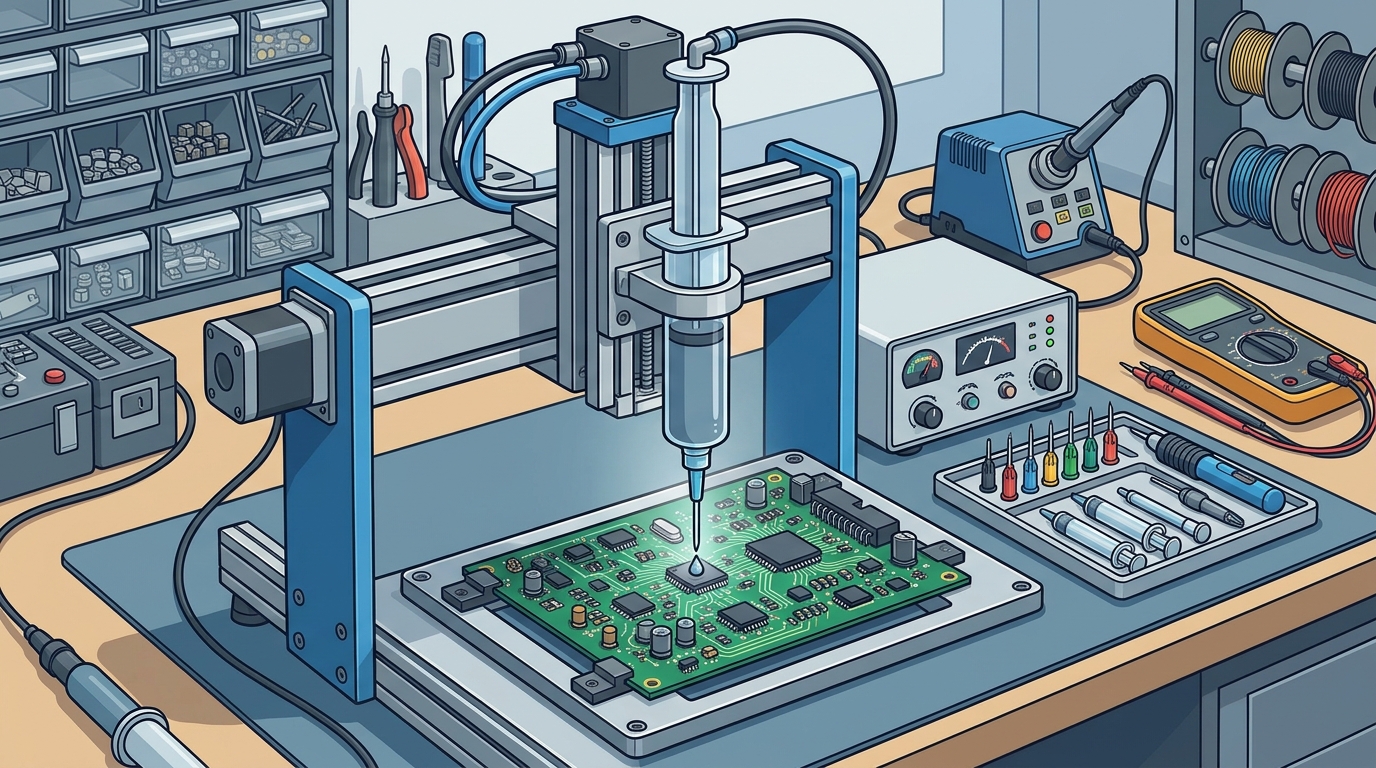
Regulatory and Safety Standards
Key Takeaways
- Dispensing technology is the process of applying controlled amounts of liquid materials.
- Material compatibility and viscosity are primary factors in system selection.
- Accuracy and repeatability are essential for high-quality electronics assembly.
- Integration with existing workflows affects efficiency and operator training.
- Regulatory and safety standards must be considered for compliance.
- PK Elektronik Vertriebs GmbH provides specialized tools for these tasks.
Frequently Asked Questions
What is a precision dispensing system?
A precision dispensing system is a machine that applies controlled amounts of liquid materials to specific locations. It is used in electronics manufacturing for tasks like applying adhesives and sealants.
How does viscosity affect dispensing?
Viscosity affects the pressure and flow rate required for accurate dispensing. High-viscosity materials need more pressure, while low-viscosity materials may need slower flow rates.
What is the importance of accuracy in dispensing?
Accuracy ensures that the same volume of material is applied to every component. This is critical for the performance and reliability of the final product.
Can dispensing systems be integrated with automated lines?
Yes, many dispensing systems can be integrated with automated assembly lines. This allows for programming and monitoring of dispensing parameters.
What safety standards apply to dispensing systems?
Dispensing systems must comply with electrical safety and machine safety standards. Materials used may also be subject to environmental regulations. Learn more: pkelektronik com.