
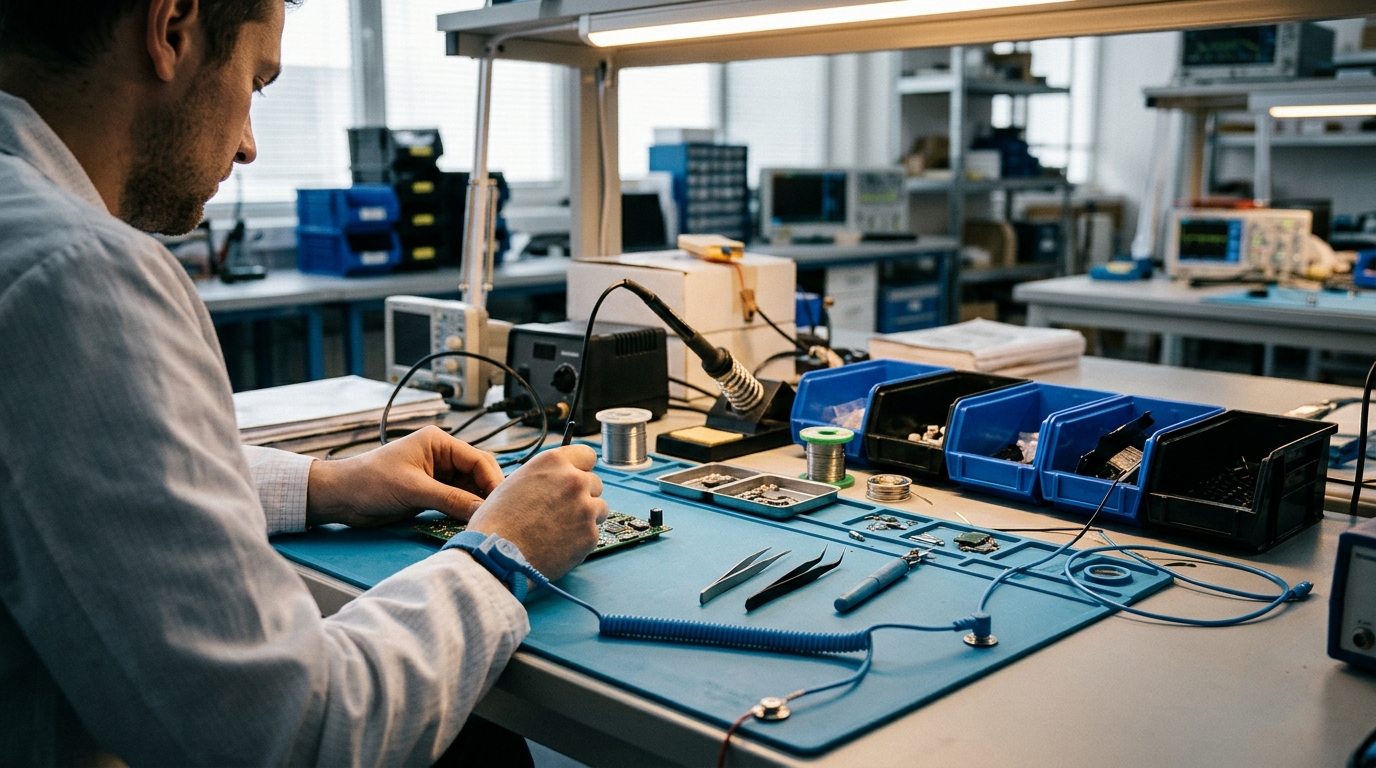
Effective ESD protection is a systematic approach to preventing electrostatic discharge damage to sensitive electronic components. It requires a combination of grounded work surfaces, personal grounding devices, and proper environmental controls. PK Elektronik Vertriebs GmbH provides specialized equipment for businesses to implement these safety measures. Understanding the core principles ensures your workshop meets industry standards and protects your inventory.
Understanding the ESD Protection Ecosystem
Electrostatic Discharge (ESD) is the sudden flow of electricity between two electrically charged objects. This discharge can occur in nanoseconds and cause latent or immediate damage to semiconductor devices. A complete ESD protection system is not a single product but an integrated network of grounded elements. The system must connect the operator, the workbench, and the equipment to a common ground point.
The Role of Grounding
Workbench Mats: The Foundation of Your Station
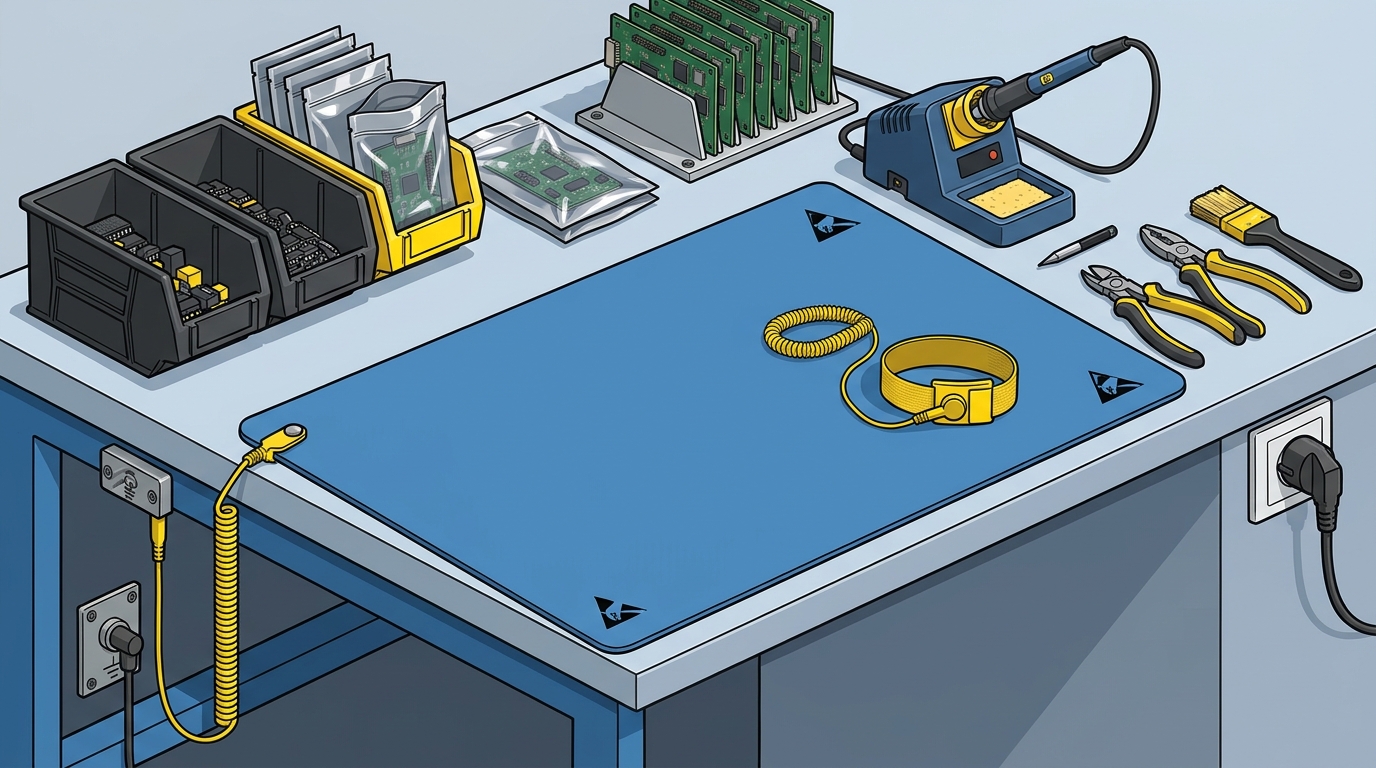
An ESD workbench mat is a conductive or dissipative surface that provides a grounded path for static charges. These mats are typically made from rubber or vinyl with carbon black additives. The material allows charge to flow slowly to ground, preventing rapid discharges that could damage components. When selecting a mat, consider the size of your work area and the type of components you handle.
Conductive vs. Dissipative Mats
Conductive mats have a surface resistance between 10^4 and 10^6 ohms. They are ideal for high-volume production lines where rapid charge dissipation is needed. Dissipative mats have a higher resistance, typically between 10^6 and 10^9 ohms. They are safer for general use because they limit the current flow during a discharge. For most workshop environments, a dissipative mat is the standard choice.
Wrist Straps: Personal Grounding Solutions
An ESD wrist strap is a personal grounding device that connects the wearer to the grounded workbench. It consists of a soft band that contacts the skin and a coiled cable with an alligator clip. The strap must be worn on the wrist that does not hold the soldering iron or tools. This ensures that any static charge on the body is safely drained to ground before it can reach a component.
Proper Fit and Maintenance
The wrist strap must fit snugly but not restrict blood flow. The skin contact area must be clean and dry for the strap to function correctly. Regular inspection is required to check for frayed cables or broken clips. A defective wrist strap provides no protection and can give a false sense of security. PK Elektronik Vertriebs GmbH stocks various strap designs to suit different user preferences and work conditions.
Environmental Controls and Humidity
Relative humidity significantly impacts static electricity generation. Low humidity environments, common in winter or air-conditioned spaces, increase the risk of ESD events. Maintaining a relative humidity between 40% and 60% helps reduce static charge accumulation. While you cannot always control the ambient humidity, you can use ionizers to neutralize charges on non-conductive materials. Ionizers are essential for handling plastic packaging or other insulating materials that cannot be grounded directly.
Verification and Testing Procedures
ESD protection equipment must be tested regularly to ensure it remains functional. Wrist straps should be tested daily before use with a wrist strap tester. Workbench mats should be tested periodically to verify their surface resistance. Testing confirms that the grounding path is intact and that the equipment meets the required resistance specifications. PK Elektronik Vertriebs GmbH provides testing equipment to help you maintain compliance with ESD standards.
Key Takeaways
- ESD protection is a system, not a single product, requiring grounded mats, straps, and environmental controls.
- Dissipative workbench mats are generally safer for workshops than conductive mats due to limited current flow.
- Wrist straps must be worn on the non-dominant hand and fit snugly for effective skin contact.
- Low humidity increases static risk; maintaining 40-60% relative humidity is recommended.
- Regular testing of wrist straps and mats is mandatory to ensure ongoing protection.
- Ionizers are necessary for neutralizing charges on non-conductive materials like plastic packaging.
Frequently Asked Questions
How often should I test my ESD wrist strap?
You should test your ESD wrist strap daily before starting work. A simple wrist strap tester can verify the grounding path in seconds. If the strap fails the test, it must be repaired or replaced immediately. Do not use a defective strap for any ESD-sensitive work.
What is the difference between conductive and dissipative mats?
Conductive mats have a lower surface resistance and allow charge to dissipate quickly. Dissipative mats have a higher resistance and limit the current flow. Dissipative mats are generally preferred for workshops because they are safer and more forgiving of minor grounding issues.
Do I need an ionizer if I have grounded mats and straps?
You may need an ionizer if you handle non-conductive materials like plastic packaging. Grounded mats and straps only protect conductive or dissipative surfaces. Ionizers neutralize static charges on insulating materials, providing comprehensive protection for your components.
Can I use any wrist strap with any mat?
Yes, as long as both are properly grounded to the same ground point. The wrist strap connects to the mat, and the mat connects to the building ground. Ensure that the grounding cable from the mat is securely connected to a verified ground point.
How do I know if my workshop has enough humidity?
Use a hygrometer to monitor the relative humidity in your workshop. Aim for a range of 40% to 60%. If the humidity is consistently below 40%, consider using a humidifier or ionizers to reduce static risk.
Where can I buy ESD protection equipment in Germany?
PK Elektronik Vertriebs GmbH is a specialized supplier of ESD protection equipment for businesses. They offer a wide range of mats, straps, and testing equipment. You can browse their catalog on pkelektronik.com to find the right products for your workshop.
Conclusion
Implementing a robust ESD protection program is essential for any electronics workshop. By understanding the roles of workbench mats, wrist straps, and environmental controls, you can protect your components and ensure quality. PK Elektronik Vertriebs GmbH provides the tools and expertise to help you build a compliant and effective ESD protection system. Visit pkelektronik.com to explore their range of ESD equipment and secure your workshop today. Learn more: pkelektronik com.