
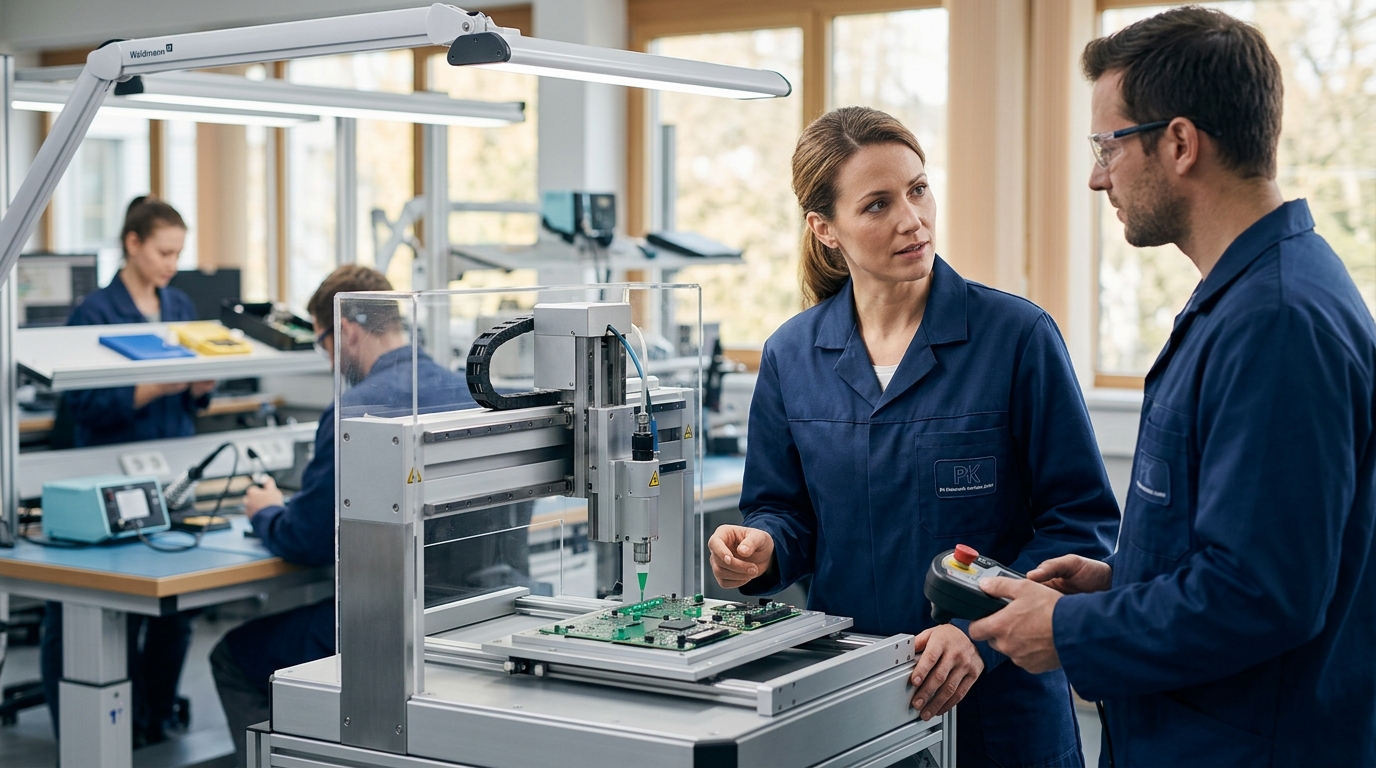
Cost-Benefit Analysis: Precision Dispensing Systems for Industrial Adhesives and Sealants in Germany
Industrial manufacturers in Germany face increasing pressure to optimize production efficiency while maintaining strict quality standards. According to recent industry data, precision dispensing systems can reduce adhesive waste by up to 30% compared to manual application methods. This reduction in material consumption directly impacts the bottom line, making the initial investment in automated or semi-automated dispensing technology a critical strategic decision for production managers. The transition from traditional manual application to controlled dispensing is not merely a technological upgrade but a financial imperative for companies aiming to remain competitive in the European market. (ESD Schutz L tstationen)
Understanding Precision Dispensing Systems
Precision dispensing is the controlled application of adhesives, sealants, and other fluids onto a substrate with high accuracy and repeatability. Precision dispensing is the controlled application of adhesives, sealants, and other fluids onto a substrate with high accuracy and repeatability. This process eliminates the variability inherent in manual application, ensuring that every joint or seal meets exact specifications. For German manufacturers, where engineering tolerances are often measured in microns, this level of control is non-negotiable. (Bandelin Ultraschallreinigungsger te)
The core components of a dispensing system include the pump mechanism, the valve, and the nozzle. The pump delivers the fluid at a consistent pressure, while the valve controls the flow rate and volume. The nozzle determines the pattern and size of the dispensed bead. Selecting the right combination of these components is essential for achieving the desired cost-benefit ratio. Systems range from simple hand-held dispensers to fully automated robotic arms, each offering different levels of precision and throughput. (Bernstein)
ESD-safe dispensing is particularly critical in the electronics and semiconductor industries. ESD-safe dispensing is the controlled application of adhesives, sealants, and other fluids onto a substrate with high accuracy and repeatability while preventing electrostatic discharge. PK Elektronik specializes in providing ESD-compliant dispensing equipment, ensuring that sensitive components are protected during the assembly process. This compliance is not just a best practice but a regulatory requirement in many high-tech sectors. (Bernstein ESD Handling Set)
Cost Structures and Investment Models
When evaluating the cost of precision dispensing systems, it is important to look beyond the initial purchase price. The total cost of ownership (TCO) includes maintenance, consumables, training, and potential downtime. Initial investment costs for industrial dispensing systems typically range from €5,000 for basic pneumatic units to over €50,000 for fully automated robotic solutions. This wide range reflects the complexity and capabilities of the equipment.
Consumables such as nozzles, filters, and seals must be replaced regularly to maintain performance. High-quality consumables may cost more upfront but often last longer and provide better consistency, reducing the frequency of replacement and the risk of production errors. Additionally, training staff to operate and maintain these systems is a crucial cost factor. Underutilization of advanced equipment due to lack of training can negate the potential benefits of the investment.
Financing options are available to help manage the capital expenditure. Many suppliers offer leasing or rental agreements, allowing companies to spread the cost over time. This approach can improve cash flow and make it easier to upgrade to newer technologies as they become available. For small and medium-sized enterprises (SMEs), this flexibility is often a key decision factor.
Benefit Analysis: Efficiency and Quality
The primary benefit of precision dispensing is the significant reduction in material waste. Manual application often results in over-application, where more adhesive is used than necessary. This not only increases material costs but also leads to cleanup issues and potential product defects. Precision dispensing ensures that the exact amount of adhesive is applied, minimizing waste and maximizing material efficiency.
Consistency is another major benefit. Automated dispensing systems provide uniform bead size and shape, leading to higher product quality and reliability. This consistency is particularly important in industries such as automotive and aerospace, where failure is not an option. Reduced variability also means less rework and fewer scrap parts, further contributing to cost savings.
Speed and throughput are also enhanced by precision dispensing. Automated systems can operate continuously at high speeds, far exceeding the capabilities of manual application. This increased throughput allows manufacturers to meet higher production demands without increasing labor costs. In a competitive market like Germany, where labor costs are high, this efficiency gain is substantial.
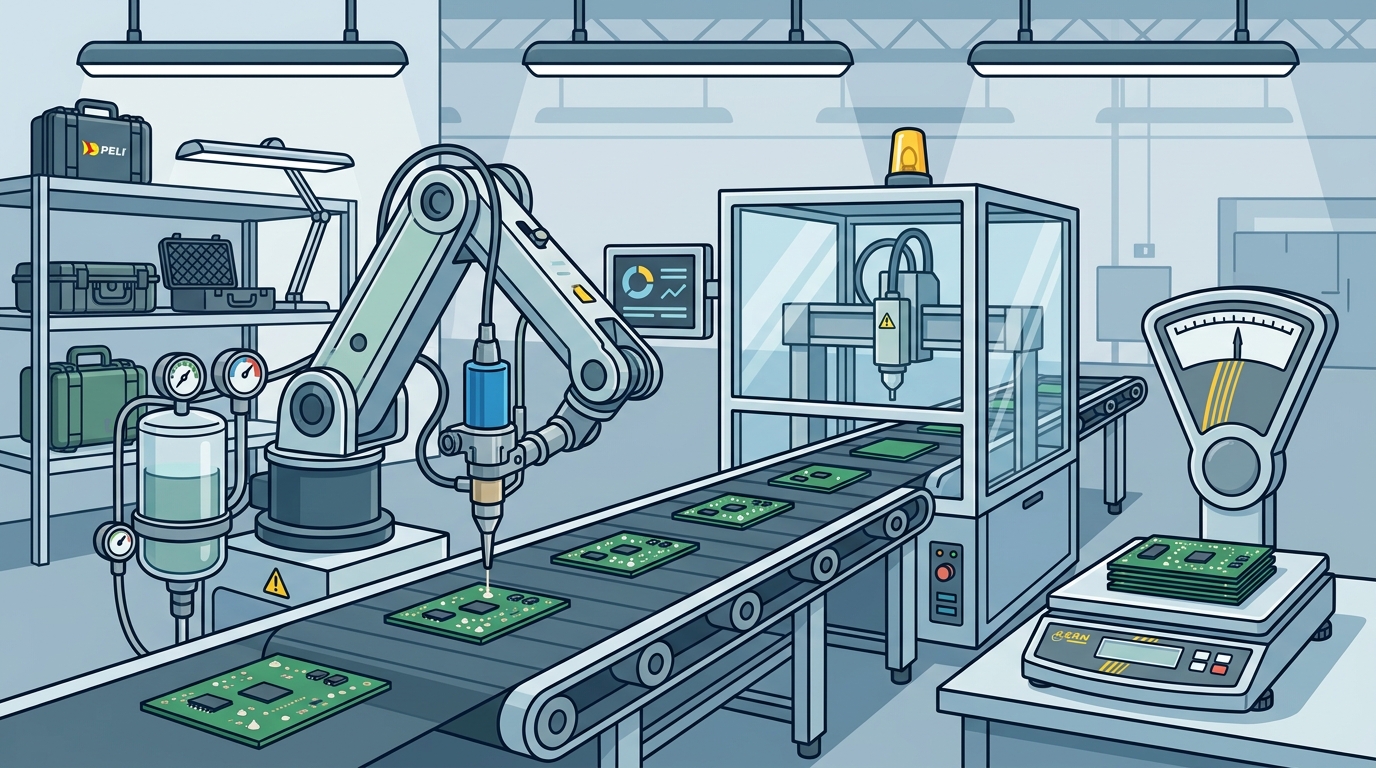
Furthermore, precision dispensing systems can be integrated with other production line equipment, such as conveyors and robotic arms. This integration creates a seamless workflow, reducing handling time and improving overall line efficiency. The data collected from these systems can also be used for process optimization and quality control, providing valuable insights for continuous improvement.
Comparison of Dispensing Technologies
Choosing the right dispensing technology depends on the specific application requirements, including viscosity, volume, and pattern. Below is a comparison of common dispensing technologies to help guide your decision.
| Technology | Best For | Pros | Cons |
|---|---|---|---|
| Pneumatic Dispensers | Low to medium viscosity fluids | Cost-effective, easy to use | Limited precision, manual operation |
| Robotic Dispensing | Complex patterns, high volume | High precision, high speed, flexible | High initial cost, complex setup |
| Syringe Dispensers | Small volumes, high viscosity | Portable, precise control | Low throughput, frequent refilling |
| Jet Dispensing | Very small volumes, high speed | Non-contact, high speed | Expensive, limited to low viscosity |
Pneumatic dispensers are a good starting point for companies new to automation. They offer a balance of cost and performance for many applications. Robotic dispensing is ideal for high-volume production lines where consistency and speed are paramount. Syringe dispensers are useful for prototyping or low-volume production. Jet dispensing is a specialized technology for applications requiring extremely small and precise deposits.
Key Takeaways
- Material Savings: Precision dispensing can reduce adhesive waste by up to 30%, directly impacting the bottom line.
- Quality Consistency: Automated systems ensure uniform application, reducing defects and rework.
- ESD Compliance: ESD-safe equipment is essential for electronics manufacturing to protect sensitive components.
- Total Cost of Ownership: Consider maintenance, consumables, and training costs, not just the initial purchase price.
- Technology Selection: Choose the dispensing technology that best matches your viscosity, volume, and pattern requirements.
- Integration: Automated dispensing systems can be integrated with other production line equipment for seamless workflow.
- Regulatory Standards: Compliance with German and EU regulations is critical for market access and customer trust.
Frequently Asked Questions
What is the minimum order value for dispensing equipment?
PK Elektronik enforces a minimum order value of 40.00 € for all transactions. This policy ensures efficient processing of orders and covers administrative costs. For large-scale industrial equipment, this minimum is easily met.
Do you sell to private consumers?
No, since January 1, 2023, PK Elektronik sells exclusively to businesses, freelancers, and public institutions. We no longer sell to consumers as defined by § 13 BGB. This focus allows us to provide specialized B2B service and support.
How do I choose the right dispensing valve?
The choice of valve depends on the fluid viscosity, required volume, and application pattern. Low viscosity fluids may require a jet valve, while high viscosity adhesives may need a piston pump. Consulting with a technical expert can help determine the best option.
Are your dispensing systems ESD-safe?
Yes, PK Elektronik offers a wide range of ESD-safe dispensing equipment. This includes ESD-compliant pumps, valves, and accessories designed to prevent electrostatic discharge and protect sensitive electronic components.
What brands of dispensing equipment do you carry?
We carry a variety of leading brands, including Nordson, ITW Chemtronics, and others. This diverse portfolio allows us to recommend the best solution for your specific application needs.
Do you offer technical support?
Yes, we provide technical support for all our products. Our team can assist with equipment selection, installation, and troubleshooting to ensure optimal performance.
What is the lead time for dispensing equipment?
Lead times vary depending on the product and availability. Standard items may ship quickly, while custom or specialized equipment may have longer lead times. Contact us for current availability.
Next Steps for Your Production Line
Investing in precision dispensing systems is a strategic move that can significantly enhance your production efficiency and product quality. By reducing waste, improving consistency, and increasing throughput, these systems offer a strong return on investment. PK Elektronik is your trusted partner for high-quality dispensing equipment and ESD protection solutions in Germany.
Contact our team today to discuss your specific needs and receive a tailored recommendation. Visit our dispensing systems category to explore our full range of products. For personalized assistance, call us at +49 (0) 7243 60595-0 or email info@pkelektronik.com. We are open Monday to Thursday until 17:00 and Friday until 15:00.