
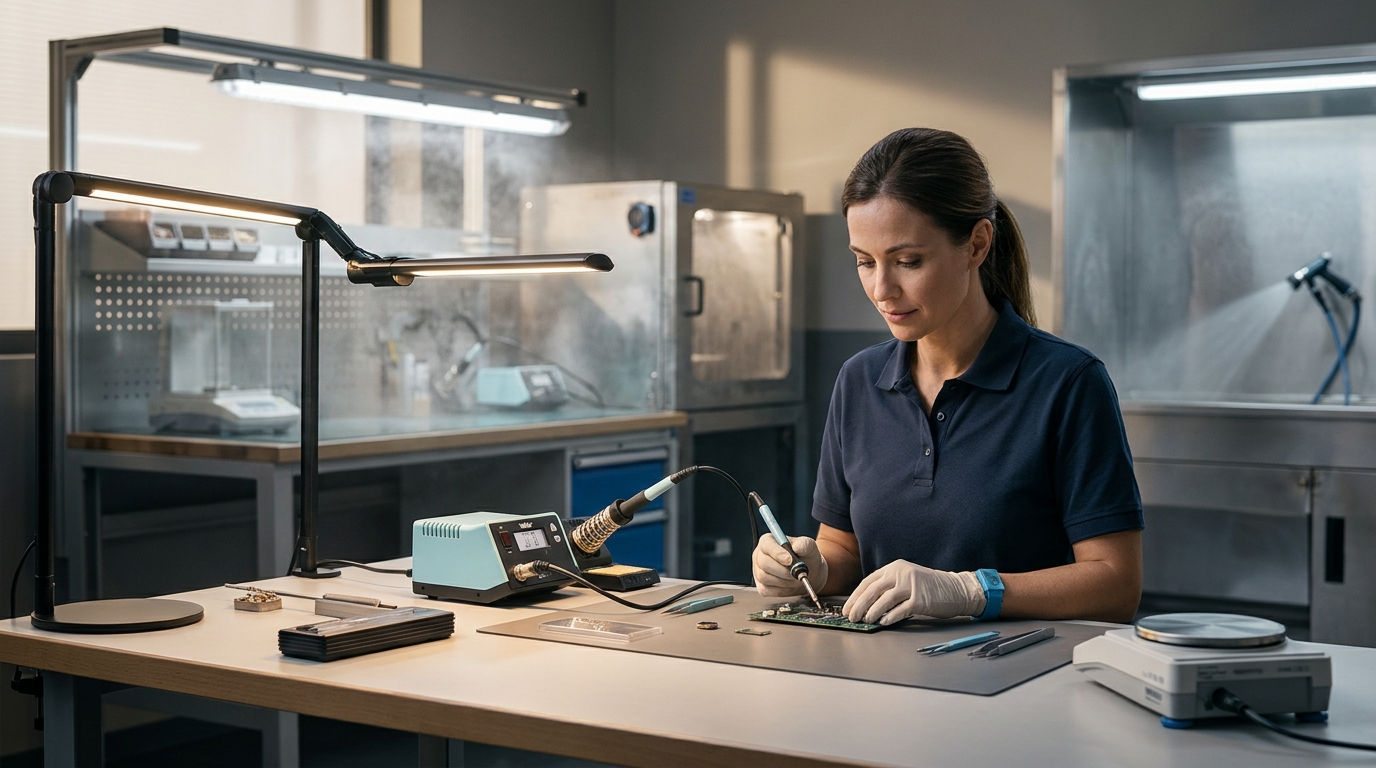
Choosing the right IP rating depends on your specific workshop environment. For dry, controlled assembly areas, IP20 or IP40 is typically sufficient. For wet, dusty, or wash-down zones, IP65 or higher is required to ensure equipment longevity and safety. PK Elektronik Vertriebs GmbH provides a wide range of industrial lighting and tools with clearly defined protection classes to help you match your equipment to your conditions.
Understanding IP Ratings in Industrial Settings
An IP rating is a standardized code that indicates the level of protection provided by electrical enclosures against the intrusion of solid objects and liquids. The code consists of two digits: the first digit refers to protection against solids (like dust and fingers), and the second digit refers to protection against liquids (like water jets or immersion). Understanding these digits is critical for selecting equipment that will not fail prematurely in harsh environments.
The First Digit: Solid Protection
The first digit ranges from 0 to 6. A rating of 2 protects against fingers, while a rating of 6 indicates complete dust-tightness. In a dry workshop, dust protection is often the primary concern to prevent clogging of fans and sensors. In wet areas, dust often travels with moisture, making higher solid protection ratings more relevant.
The Second Digit: Liquid Protection
The second digit ranges from 0 to 9K. A rating of 1 protects against dripping water, while a rating of 6 protects against powerful water jets. For workshops where cleaning involves high-pressure water or where humidity is constant, the second digit is the deciding factor for equipment survival.
Comparison of IP Ratings for Workshop Environments
The following table summarizes the most common IP ratings and their suitability for different workshop conditions. This comparison helps you quickly identify which protection level aligns with your operational reality.
| IP Rating | Solid Protection | Liquid Protection | Best For | Limitations |
|---|---|---|---|---|
| IP20 | Fingers | None | Dry, clean assembly lines | Not suitable for any moisture or dust |
| IP44 | Objects > 1mm | Splashing water | General workshops with occasional splashes | Not for high-pressure cleaning |
| IP54 | Dust-protected | Splashing water | Dusty, semi-wet environments | Dust can enter but not affect operation |
| IP65 | Dust-tight | Water jets | Wet areas, wash-down zones | Higher cost, bulkier design |
| IP67 | Dust-tight | Temporary immersion | Submerged or heavy wash-down | Overkill for standard dry workshops |
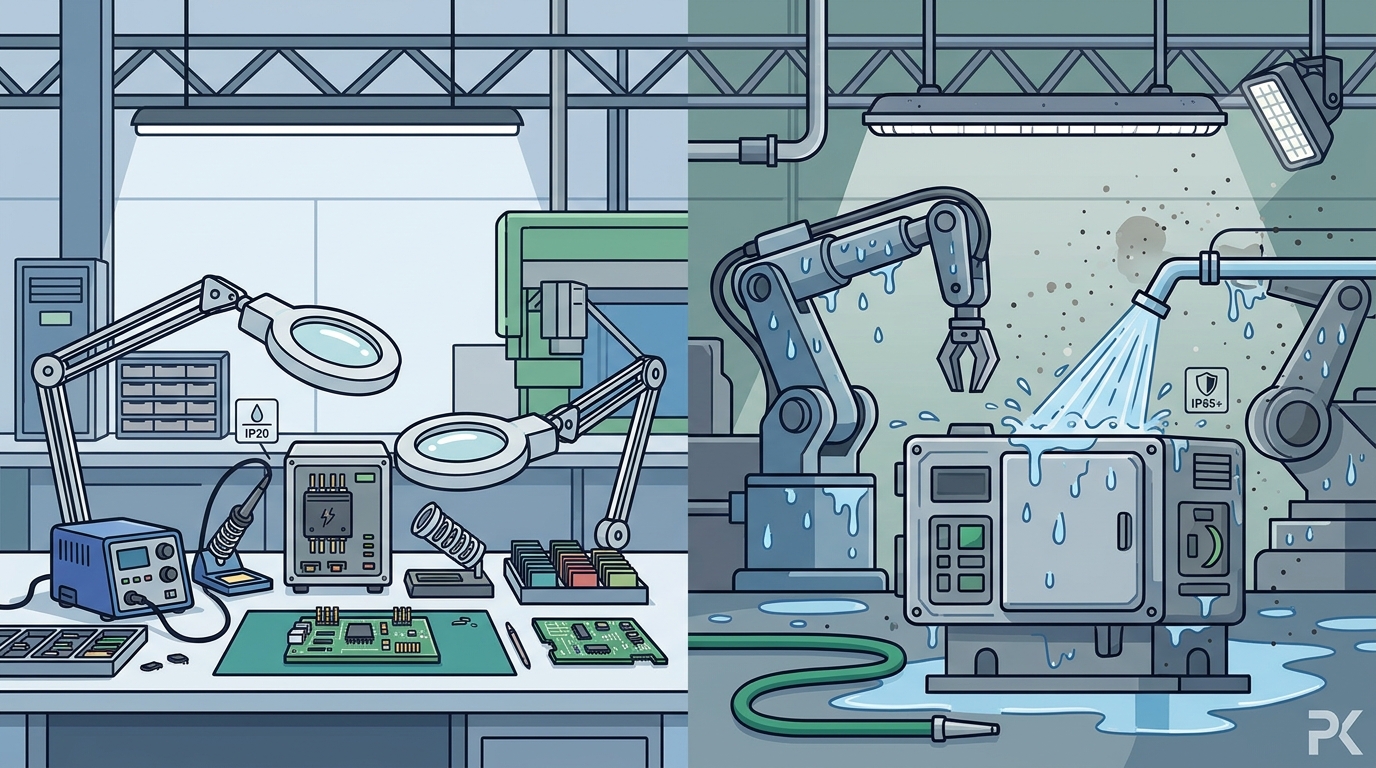
IP20 and IP40: The Dry Workshop Standard
These ratings suit readers who operate in clean, dry conditions. If your workshop has no water sources, no high-pressure cleaning, and minimal dust, IP20 or IP40 equipment is sufficient and more affordable.
IP44 and IP54: The Middle Ground
IP44 is the most common rating for general industrial workshops. It protects against splashing water from any direction. This makes it suitable for areas where occasional spills or light cleaning with a damp cloth occur. It is a robust choice for general manufacturing floors where humidity is present but not constant.
IP54 adds dust protection to the splash protection of IP44. The '5' indicates that dust is not completely excluded, but it does not enter in sufficient quantities to interfere with the equipment's operation. This rating is ideal for workshops that are both dusty and occasionally wet, such as wood processing or light metalworking areas.
These ratings suit readers who need a balance between cost and protection. They are the default choice for most general-purpose workshop equipment, including lighting and power tools, where the environment is not consistently wet or heavily dusty.
IP65 and Above: The Wet and Wash-Down Solution
IP65 is the standard for wet environments. It is dust-tight and protected against water jets. This rating is essential for areas where equipment is cleaned with high-pressure water, or where water is a constant part of the process, such as in food processing, chemical handling, or outdoor-adjacent workshops. The '6' ensures no dust enters, and the '5' ensures water jets cannot penetrate the enclosure.
IP67 and IP68 go further, allowing for temporary or continuous immersion in water. These ratings are for extreme environments where equipment might be submerged. For most workshop applications, IP65 is the practical ceiling. Going higher increases cost and bulk without providing significant benefit unless immersion is a regular occurrence.
These ratings suit readers who operate in wet, wash-down, or highly dusty environments. If your cleaning process involves water jets or if your workshop is exposed to constant moisture, IP65 or higher is non-negotiable for equipment longevity.
Choosing the Right Rating for Your Workshop
Selecting the correct IP rating requires an honest assessment of your daily operations. Ask yourself: Is water present? Is dust present? How is the equipment cleaned? These questions determine the minimum IP rating required.
Choose IP20 or IP40 if...
Your workshop is dry and climate-controlled. There is no water, steam, or high-pressure cleaning. Dust is minimal or controlled by ventilation. You are looking for the most cost-effective solution for standard indoor use.
Choose IP44 or IP54 if...
Your workshop has occasional splashes or light cleaning. Dust is present but not excessive. You need a balance between protection and cost. This is the standard for most general manufacturing and assembly areas.
Choose IP65 or higher if...
Your workshop is wet, dusty, or involves wash-down procedures. Water jets are used for cleaning. The environment is harsh, and equipment failure due to moisture or dust is a significant risk. You need maximum protection for critical equipment.
Frequently Asked Questions
Can I use IP44 equipment in a wet workshop?
What is the difference between IP54 and IP65?
The difference lies in dust protection. IP54 is dust-protected, meaning dust can enter but not in harmful quantities. IP65 is dust-tight, meaning no dust can enter at all. If your environment is extremely dusty, IP65 is the safer choice to prevent long-term clogging and failure.
Do I need IP67 for a standard workshop?
No, IP67 is for temporary immersion in water. For standard workshops, even wet ones, IP65 is usually sufficient. IP67 adds cost and bulk without providing significant benefit unless your equipment is regularly submerged or exposed to extreme water pressure.
How does humidity affect IP rating selection?
High humidity can condense inside equipment, even if no liquid is present. In such cases, a higher IP rating (like IP54 or IP65) helps prevent moisture ingress. For dry workshops with low humidity, IP20 or IP40 is sufficient. Humidity is a key factor in choosing between dry and wet ratings.
Can I upgrade an IP20 device to IP65?
No, IP ratings are inherent to the design of the enclosure. You cannot upgrade an IP20 device to IP65 by adding seals or covers. You must purchase equipment that is manufactured with the required IP rating. Always check the manufacturer's specifications before buying. Learn more: Kontaktieren Sie uns.