
Common Soldering and Fume Extraction Mistakes in Professional Electronics Workshops
Professional electronics manufacturing faces significant regulatory and health challenges daily. According to OSHA, exposure to soldering fumes is a documented hazard that requires strict industrial hygiene controls. Workshops that ignore these protocols risk both employee health and operational compliance. This guide details the most frequent technical errors made by technicians and engineers, providing actionable solutions to elevate workshop standards. (ESD Schutz L tstationen)
Fume Extraction System Failures
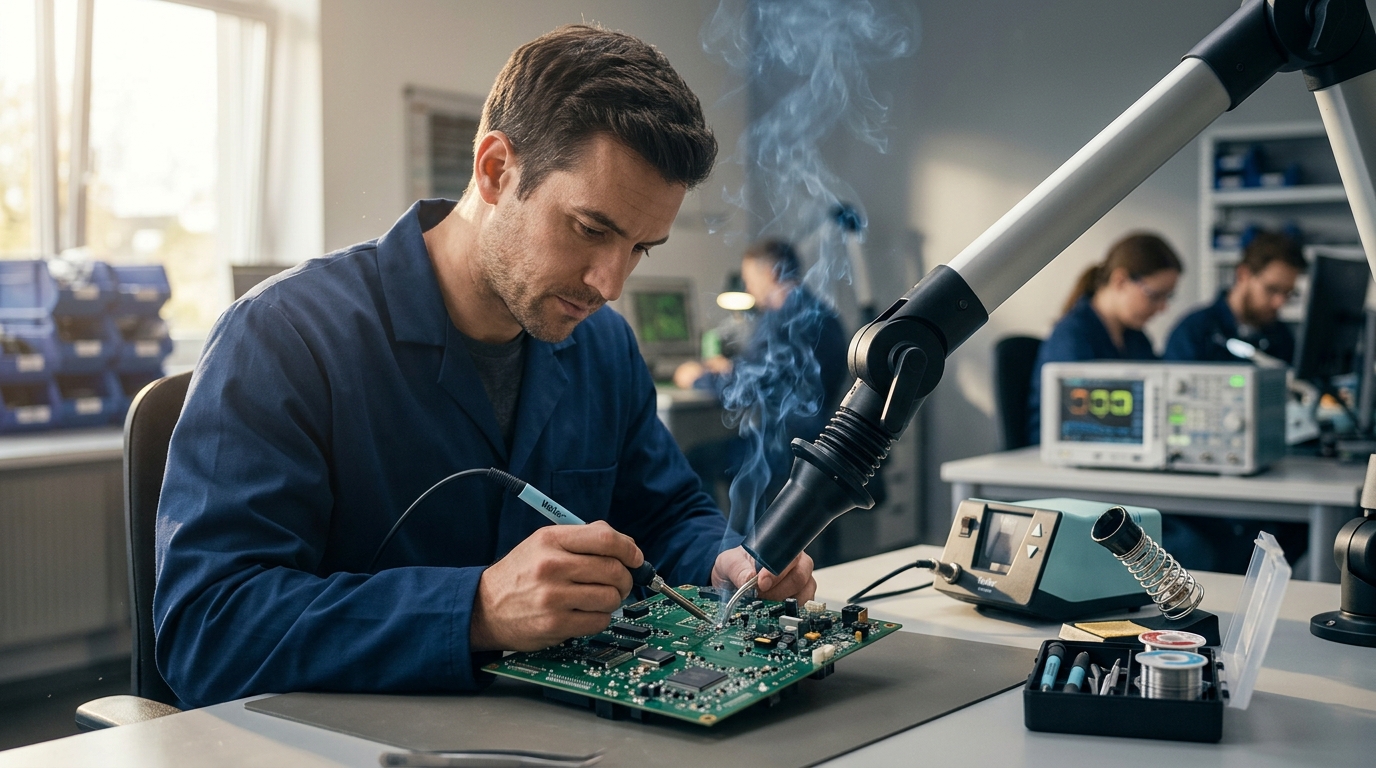
The most critical error in any professional workshop is the neglect of proper fume extraction. Soldering flux releases volatile organic compounds (VOCs) and particulate matter that are hazardous when inhaled over time. Many workshops install extraction arms but fail to position them correctly. The capture point must be within two inches of the soldering joint to effectively remove contaminants before they enter the breathing zone. (ESD Schutz L tstationen)
Inadequate Airflow Velocity
Extraction arms require sufficient airflow to function. Data from the National Institute for Occupational Safety and Health indicates that insufficient airflow allows toxic particles to disperse into the general workspace. Technicians often ignore filter replacement schedules, leading to clogged filters that reduce suction power. Regular maintenance of fume extraction systems is essential to maintain optimal performance. (Bandelin Ultraschallreinigungsger te)
Ignoring Local Exhaust Ventilation
Some workshops rely solely on general room ventilation. This approach is ineffective for localized hazards. Local exhaust ventilation at the source is the only reliable method for controlling soldering fumes. Without dedicated extraction units, particulate matter settles on components and workbenches, causing long-term contamination issues. (Bernstein)
Critical Soldering Technique Errors
Technical proficiency in soldering directly impacts the reliability of electronic assemblies. Poor technique leads to cold joints, bridging, and component damage. These errors are often rooted in a lack of standardized procedures and inadequate tool maintenance.
Incorrect Temperature Settings
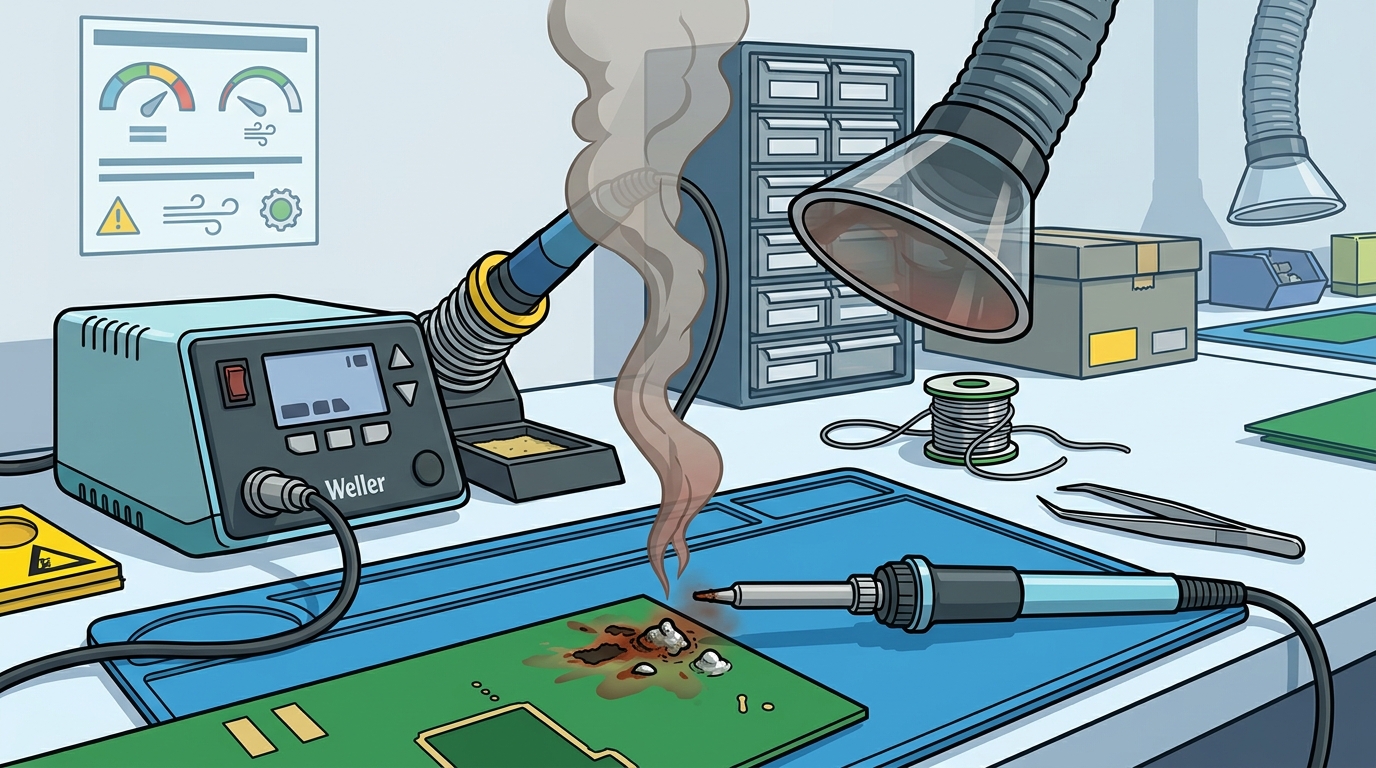
Using the wrong temperature for the soldering iron or hot air gun is a common mistake. Too low a temperature results in poor wetting and cold joints. Too high a temperature damages sensitive components and degrades the iron tip. Industry standards recommend specific temperature ranges based on the solder alloy and joint size. For lead-free solder, higher temperatures are typically required compared to leaded solder.
Poor Tip Maintenance
A dirty or oxidized soldering tip transfers heat inefficiently. Technicians often neglect to clean the tip regularly using appropriate tip cleaners. Oxidation prevents solder from flowing correctly, leading to unreliable connections. Regular tinning of the tip with fresh solder protects it from oxidation and ensures consistent heat transfer.
Insufficient Heat Soaking
Applying the iron to the joint for too short a time prevents the joint from reaching the correct temperature. The solder must flow freely into the joint to form a strong metallurgical bond. According to JEDEC standards, proper heat soaking ensures that the entire joint reaches the melting point of the solder simultaneously. This prevents cold joints and ensures long-term reliability.
ESD Control and Grounding Lapses
Electrostatic discharge (ESD) is a silent killer in electronics manufacturing. It can damage components instantly or cause latent failures that appear months later. Many workshops fail to implement a comprehensive ESD protection program.
Incomplete Grounding
Technicians must be properly grounded at all times. This includes wearing ESD wrist straps connected to a common ground point. Relying solely on ESD mats is insufficient. The wrist strap must make direct skin contact and be checked regularly for continuity. Broken straps are a common source of ESD events.
Ignoring ESD Packaging
Components must be stored and transported in appropriate ESD-safe packaging. Using non-conductive materials like standard plastic bags can generate static charges that damage sensitive components. Metal-in-paper bags or conductive trays are required for storage and transport.
Lack of Ionization
In environments where materials cannot be grounded, such as plastics, static charge can accumulate. The ESD Association recommends the use of ionizers to neutralize static charges on non-conductive surfaces. Without ionization, components can attract dust and suffer from electrostatic discharge.
Cleaning and Maintenance Oversights
Post-soldering cleaning is often overlooked, but it is critical for long-term reliability. Flux residues can be corrosive and conductive, leading to short circuits and dendritic growth over time.
Inadequate Flux Removal
Technicians must use appropriate electronics cleaners to remove flux residues. Water-based cleaners are effective for no-clean fluxes but require thorough rinsing. Solvent-based cleaners are faster but require proper ventilation and safety protocols. Chemtronics guidelines suggest matching the cleaner to the flux type for optimal results.
Neglecting Ultrasonic Cleaners
For complex assemblies, ultrasonic cleaning is often necessary. However, improper use of ultrasonic cleaners can damage components. Frequency, temperature, and cleaning time must be optimized for the specific assembly. Over-cleaning can remove conformal coatings or damage delicate components.
Equipment Selection and Calibration
Using the wrong tools or using them incorrectly is a fundamental error. Professional workshops must invest in high-quality equipment and maintain it rigorously.
Using Inappropriate Soldering Irons
Not all soldering irons are created equal. Professional soldering stations offer precise temperature control and rapid heat recovery. Using cheap, unregulated irons leads to inconsistent results and component damage. The choice of iron should match the workload, from fine-pitch SMD work to large through-hole joints.
Ignoring Calibration
Equipment must be calibrated regularly to ensure accuracy. ISO standards require regular verification of temperature and airflow measurements. Uncalibrated equipment leads to process variability and quality issues. Regular calibration logs should be maintained for compliance and quality assurance.
Using the Wrong Solder Wire
Selecting the correct solder wire is critical. The alloy composition, diameter, and flux core must match the application. Almit solder wires are a popular choice for their consistency and reliability. Using the wrong diameter can lead to poor joint formation or excess solder usage.
Key Takeaways
- Fume Extraction is Critical: Always position extraction arms within two inches of the soldering joint to protect worker health.
- Maintain Soldering Tips: Clean and tin tips regularly to ensure efficient heat transfer and prevent oxidation.
- Grounding is Non-Negotiable: Use ESD wrist straps and mats connected to a common ground to prevent electrostatic discharge.
- Clean Flux Residues: Remove flux residues using appropriate electronics cleaners to prevent corrosion and conductivity issues.
- Calibrate Equipment: Regularly calibrate soldering stations and extraction systems to ensure accuracy and compliance.
- Select the Right Tools: Invest in professional-grade soldering stations and ESD-safe packaging for reliable results.
- Follow Standards: Adhere to JEDEC and ISO standards for soldering processes and ESD protection.
Frequently Asked Questions
What is the most common mistake in soldering?
The most common mistake is insufficient heat application, leading to cold joints that are mechanically weak and electrically unreliable.
How often should fume extraction filters be replaced?
Filters should be replaced based on usage and airflow measurements, typically every three to six months, to maintain effective extraction.
Why is ESD protection important in soldering?
ESD protection prevents electrostatic discharge from damaging sensitive electronic components, which can cause immediate failure or latent defects.
What type of solder wire is best for professional use?
Professional workshops typically use high-quality lead-free solder wires with a consistent flux core, such as those from Almit, for reliability and compliance.
How do I clean flux residues effectively?
Use an appropriate electronics cleaner, such as electronics cleaner, and ensure thorough rinsing or evaporation to remove all residues.
What is the role of ionization in ESD control?
Ionization neutralizes static charges on non-conductive materials, preventing electrostatic discharge in environments where grounding is not possible.
How do I choose the right soldering iron?
Choose a soldering iron based on the workload, ensuring it offers precise temperature control and rapid heat recovery for consistent results.
Contact PK Elektronik
PK Elektronik specializes in providing high-quality ESD protection, soldering equipment, and workshop supplies for professional electronics manufacturing. We offer a wide range of products, including soldering stations, ESD wrist straps, and ultrasonic cleaners. Contact us today to optimize your workshop and ensure compliance with industry standards.