
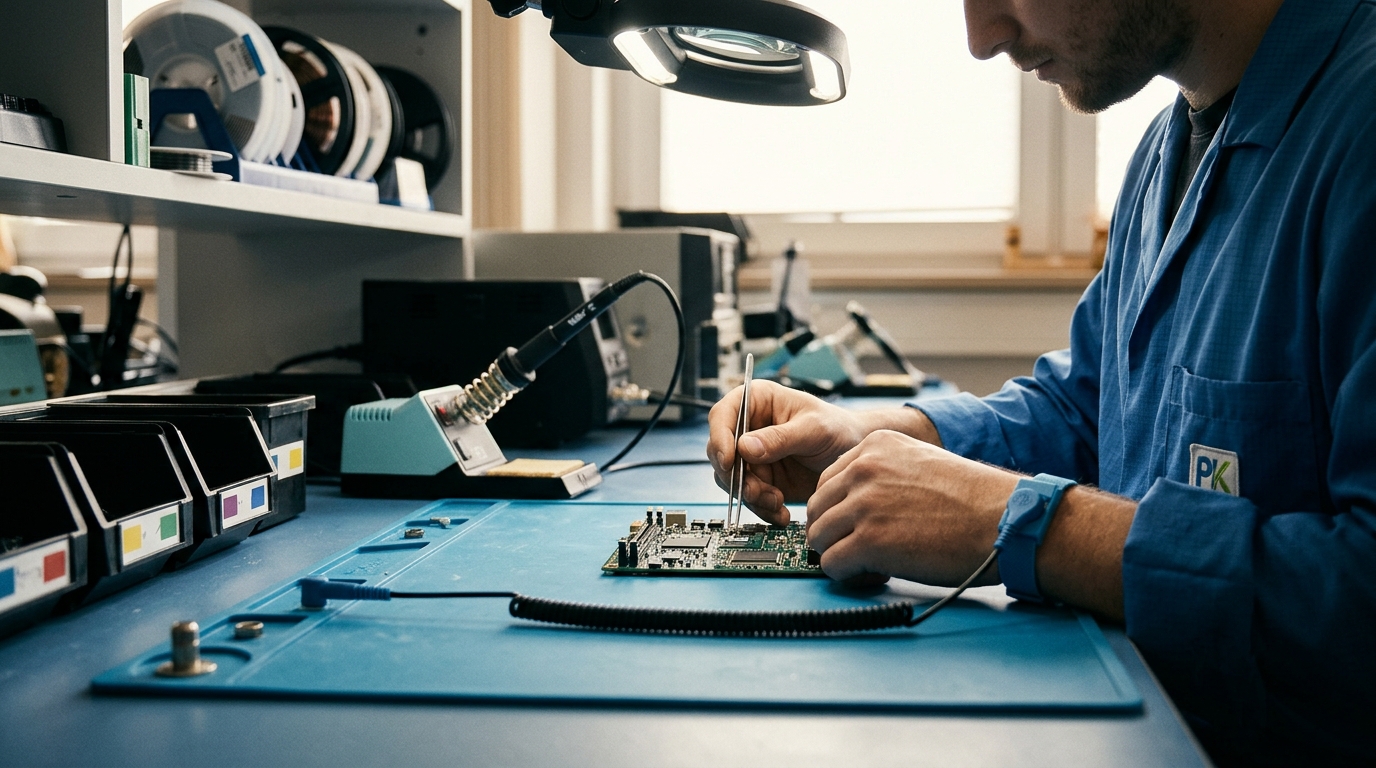
The ESD-Safe Workstation
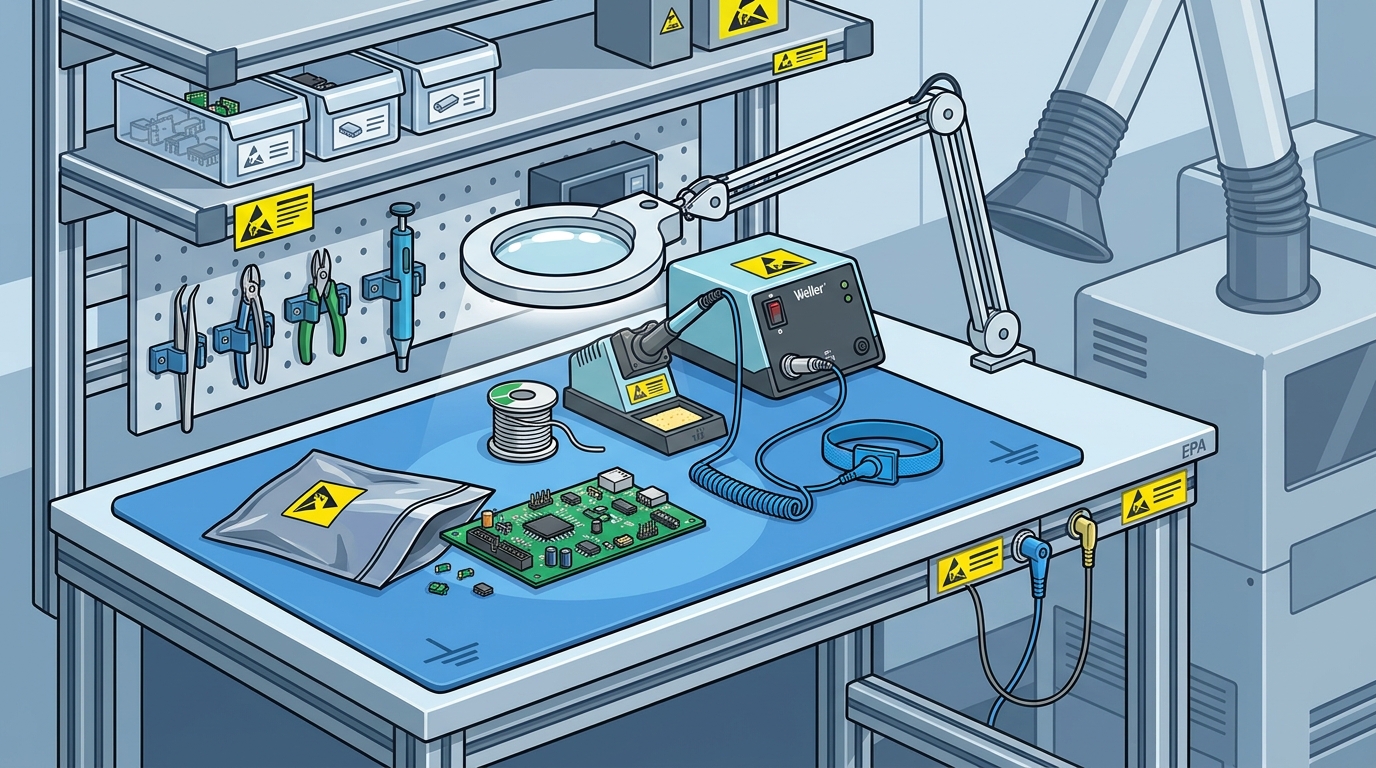
The foundation of any ESD-protected area (EPA) is the workstation. An ESD-safe workstation is a designated area where all surfaces and tools are designed to dissipate static charge safely to ground. Without a properly grounded surface, static electricity can accumulate on components, leading to latent defects that may not appear until the product is in use. For additional details, review the Kontaktieren Sie uns.
Lighting is also a crucial part of the workstation setup. Poor visibility leads to handling errors, which can compromise ESD protection. PK Elektronik supplies ESD-safe task lights and LED work lights that provide high-quality illumination without generating static charge. These lights are often equipped with flexible goosenecks to direct light precisely where needed.
Personnel Grounding and Verification
Humans are the primary source of static charge in an EPA. Personnel grounding is the process of connecting a person to ground to safely dissipate static charge. This is typically achieved through ESD wrist straps, ESD footwear, or ESD smocks. Wrist straps are the most common method for seated work, while footwear is essential for standing workstations. For additional details, review the Erem.
However, wearing ESD equipment is not enough. You must verify that the grounding is effective. A person grounding tester is a device that checks the resistance of the ESD path from the person to ground. PK Elektronik provides person grounding testers that can verify wrist straps, footwear, and floor mats. Regular testing is mandatory in most ESD standards. For instance, a wrist strap should be tested at the start of every shift. If the test fails, the equipment must be replaced immediately. For additional details, review the FLIR W rmebildkameras Infrarotkameras.
ESD-safe seating is another often-overlooked component. Standard office chairs can generate significant static charge. An ESD chair is designed with conductive materials and grounded casters to prevent charge accumulation. PK Elektronik stocks ESD swivel chairs that are suitable for long working hours, ensuring both comfort and safety. For additional details, review the PELI Schutzkoffer LED Taschenlampen.
Flooring and Grounding Infrastructure
For larger facilities, ESD-safe flooring is essential. ESD flooring is a type of floor covering that dissipates static charge to ground. It is typically made of vinyl or rubber with conductive properties. The flooring must be connected to a grounding point, usually the building's earth ground. This creates a continuous path for static charge to dissipate safely.
Packaging and Handling
ESD-safe packaging is the final line of defense in an EPA. It protects components during storage and transport. ESD-safe packaging is made from materials that dissipate static charge, such as pink antistatic bags or black conductive bags. The choice of packaging depends on the level of protection required. For example, pink bags are suitable for most electronic components, while black bags provide higher protection for highly sensitive devices.
PK Elektronik supplies a wide range of ESD-safe packaging options, including bags, boxes, and trays. These products are designed to be compatible with various component sizes and shapes. When selecting packaging, consider the size of the components, the duration of storage, and the environmental conditions. For instance, components stored in a humid environment may require packaging with additional moisture protection. Proper packaging ensures that components remain protected from static discharge until they are ready for assembly.
Monitoring and Maintenance
Documentation is a critical part of ESD management. Keeping records of ESD tests, equipment maintenance, and personnel training is essential for compliance with ESD standards. PK Elektronik provides documentation templates and software that can help you manage your ESD program. Proper documentation ensures that your EPA remains effective and that you can demonstrate compliance during audits.
Key Takeaways
- Personnel grounding must be verified regularly using a person grounding tester.
- ESD-safe lighting and seating are essential for preventing static charge accumulation.
- ESD flooring must be connected to a grounding point and tested regularly.
- ESD-safe packaging protects components during storage and transport.
- Ongoing monitoring and maintenance are required to ensure the ESD system remains effective.
- Documentation is critical for compliance with ESD standards.
Frequently Asked Questions
What is among the primary purpose of an ESD protection setup?
The primary purpose is to prevent static discharge from damaging sensitive electronic components during handling, assembly, and storage.
How often should ESD equipment be tested?
Wrist straps should be tested at the start of every shift. Floor mats and workbench tops should be tested regularly, typically monthly or quarterly, depending on the standard.
Can I use standard office chairs in an ESD-protected area?
No, standard office chairs can generate static charge. You should use ESD-safe chairs with grounded casters in an EPA.
What is among the difference between conductive and dissipative ESD materials?
Conductive materials have a low surface resistance and drain charge quickly. Dissipative materials have a higher surface resistance and drain charge more slowly. Both are used in ESD protection, but for different applications.
Do I need ESD flooring for a small repair bench?
For a small repair bench, ESD flooring may not be necessary if the workstation is properly grounded. However, for larger facilities, ESD flooring is recommended to ensure comprehensive protection.
How do I choose the right ESD packaging?
Choose packaging based on the size of the components, the level of protection required, and the environmental conditions. Pink antistatic bags are suitable for most components, while black conductive bags provide higher protection.