

Common ESD/EPA Setup Mistakes in German Electronics Manufacturing Facilities
Electrostatic discharge (ESD) remains one of the most silent and costly threats to electronics manufacturing integrity. In Germany, where precision engineering and compliance with DIN EN 61340-2-3 are non-negotiable, even minor setup errors can lead to catastrophic product failures. Recent industry data shows that up to 30% of electronic component failures are attributed to ESD damage that goes undetected during standard testing. This statistic underscores the critical need for rigorous Environmental Protection Area (EPA) management. For German manufacturers, the transition to strict B2B compliance since 2023 has further elevated the stakes for operational excellence. (ESD Schutz L tstationen)
Critical Grounding and Bonding Failures
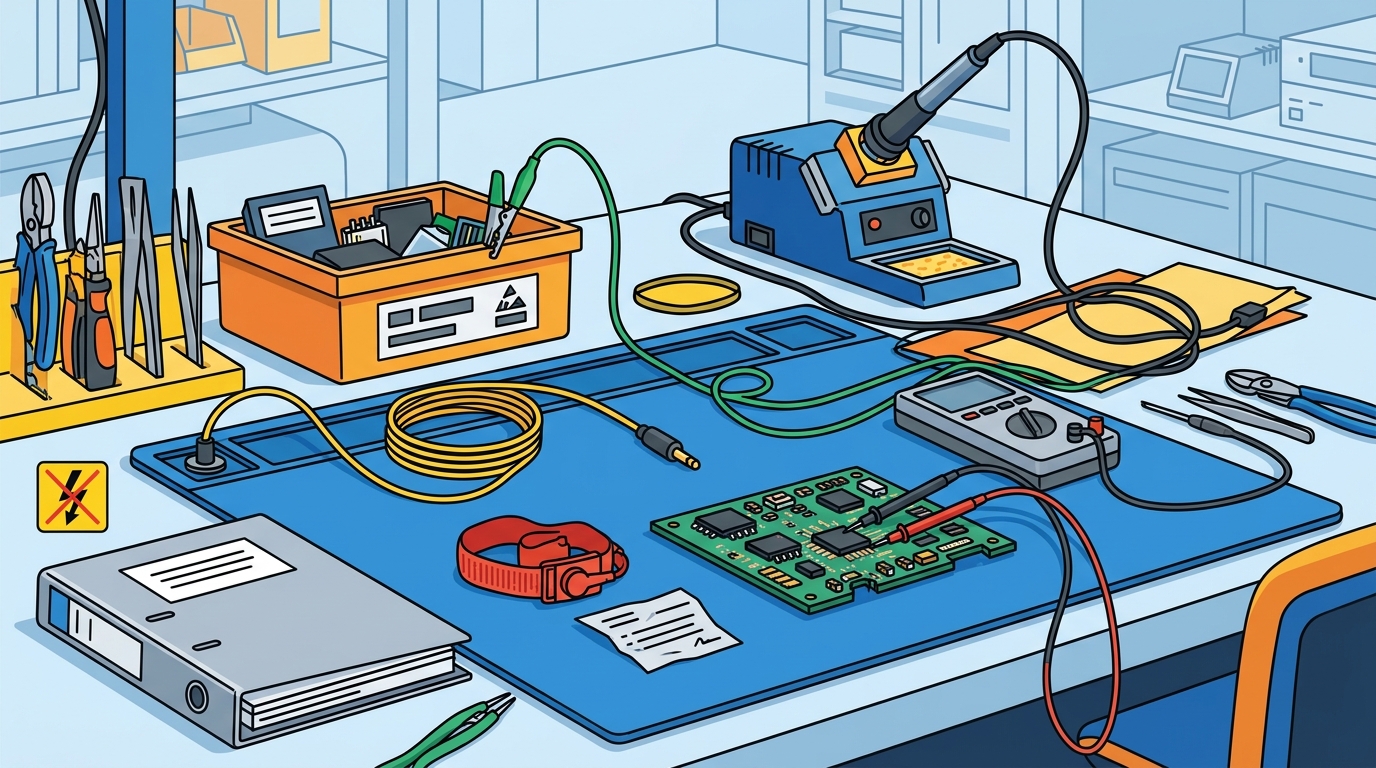
The foundation of any effective EPA is a reliable grounding system. A common mistake in German facilities is the improper use of ground straps or the neglect of continuous monitoring. ESD Handgelenkbänder (wrist straps) must be tested daily. If the ground path is broken, the entire protection scheme fails instantly. (Bandelin Ultraschallreinigungsger te)
Another frequent error involves the use of non-conductive materials near sensitive components. According to DIN EN 61340-2-3, all conductive items within an EPA must be bonded to the common grounding point. This includes tools, fixtures, and even the operator's footwear. Failure to maintain this bond creates potential differences that can discharge onto sensitive integrated circuits. (Bernstein)
ESD Erdungskabel/-zubehör (grounding cables and accessories) must be inspected for wear and tear regularly. A frayed cable may look functional but can have high resistance, rendering it useless. Manufacturers often overlook the importance of the connection point itself. A loose screw or corroded terminal can interrupt the ground path. Regular torque checks and visual inspections are essential to maintain integrity.
Furthermore, the use of isolated workbenches without proper grounding is a severe violation. The work surface must be dissipative and connected to ground. This ensures that any static charge generated on the surface is safely drained away. Without this connection, the workbench becomes a capacitor, storing charge until it discharges onto a nearby component.
Workstation Design and Surface Resistivity
Workstation design plays a pivotal role in ESD prevention. A common mistake is the use of standard office furniture in an EPA. Regular plastic chairs, for example, can generate significant static charge through friction. This charge can then discharge onto the operator or nearby components. The solution is to use ESD-safe furniture, such as the Bimos ESD Drehstuhl Neon 2, which provides permanent conductivity.
Surface resistivity is another critical parameter. The work surface must have a specific resistivity range, typically between 10^6 and 10^9 ohms. Too conductive, and it risks shorting components. Too resistive, and it cannot dissipate charge quickly enough. Regular testing with an ESD Messgeräte is required to verify this range. Many facilities fail to test their surfaces regularly, assuming they remain within spec.
Lighting is also a factor in workstation design. Poor lighting can lead to errors in component handling, increasing the risk of ESD events. ESD-Lupenleuchten provide both adequate illumination and ESD-safe operation. They are essential for precision work where static control is paramount. The integration of proper lighting reduces eye strain and improves accuracy, indirectly supporting ESD safety by reducing rushed movements.
Additionally, the layout of the workstation must minimize the distance between the operator and the ground point. Long ground cords increase the risk of disconnection and tangling. A compact, well-organized workspace ensures that all ESD control measures are easily accessible and functional. This includes the placement of ionizers, ground points, and testing devices.
Personnel Protocols and ESD Clothing
Human beings are the primary source of static charge in an EPA. A common mistake is the improper use of ESD clothing. ESD Bekleidung must be worn correctly at all times. This includes ensuring that the clothing is clean and free of contaminants that could compromise its dissipative properties. Dirty clothing can generate more static than standard fabrics.
Another critical error is the failure to wear ESD Schuhe in conjunction with ground straps. While wrist straps protect the hands, footwear protects the body. The combination of both ensures that the operator is at the same potential as the ground. Without proper footwear, the operator can accumulate charge from walking on non-conductive floors.
Training is also a significant factor. Operators must be trained on the importance of ESD control and the proper use of all equipment. This includes daily testing of wrist straps and the correct donning and doffing of ESD clothing. Many facilities provide initial training but fail to reinforce it regularly. Continuous education is key to maintaining a culture of ESD safety.
Furthermore, the use of personal electronic devices (PEDs) within an EPA is a growing concern. Mobile phones and other devices can generate static charge and electromagnetic interference. Strict policies must be in place to prohibit the use of PEDs in sensitive areas. This includes storing them in designated lockers outside the EPA.
Monitoring Systems and Ionization
Ionization is a critical component of ESD control, especially for insulative materials that cannot be grounded. A common mistake is the improper placement or maintenance of ionizers. Ionisiergeräte must be positioned close to the source of static charge to be effective. If placed too far away, the ions will dissipate before neutralizing the charge.
Another error is the failure to balance the ionizer output. An unbalanced ionizer can leave a residual charge on the component, which is just as dangerous as the original static charge. Regular testing with a ESD Messgeräte is required to ensure balance. Many facilities neglect this step, assuming the ionizer is working correctly.
Maintenance of ionizers is also often overlooked. Filters must be cleaned or replaced regularly to ensure proper airflow and ion output. Clogged filters reduce the effectiveness of the ionizer and can lead to uneven charge neutralization. A proactive maintenance schedule is essential to keep ionizers in optimal condition.
Additionally, the use of ESD Warnschilder is crucial for identifying EPA boundaries and reminding personnel of safety protocols. Clear signage helps reinforce the importance of ESD control and ensures that everyone is aware of the rules. This visual cue is a simple but effective way to maintain compliance.
Maintenance and Calibration Procedures
Regular maintenance and calibration of ESD control equipment are essential for long-term compliance. A common mistake is the neglect of calibration schedules. ESD Messgeräte must be calibrated annually to ensure accuracy. Using uncalibrated equipment can lead to false readings and a false sense of security.
Another error is the failure to document maintenance activities. Proper documentation is required for audits and compliance verification. Records should include the date of maintenance, the equipment used, and the results of any tests performed. This documentation provides a clear history of the facility's ESD control efforts.
Furthermore, the use of high-quality replacement parts is critical. Cheap or counterfeit parts may not meet the required specifications and can compromise the entire system. It is essential to source parts from reputable suppliers like PK Elektronik, which offers a wide range of certified ESD products.
Finally, a culture of continuous improvement is necessary. Regular audits and reviews of ESD procedures help identify areas for improvement. This includes updating protocols to reflect new technologies and standards. Staying current with DIN EN 61340 updates is vital for maintaining compliance.
ESD Equipment Comparison Matrix
| Equipment Type | Primary Function | Key Benefit | Recommended Supplier |
|---|---|---|---|
| ESD Wrist Straps | Operator Grounding | Prevents direct discharge to components | PK Elektronik |
| ESD Footwear | Body Potential Control | Drains charge from walking | PK Elektronik |
| Ionizers | Neutralize Insulators | Eliminates static on non-conductive materials | PK Elektronik |
| ESD Testers | Verification | Ensures equipment functionality | PK Elektronik |
| ESD Clothing | Charge Containment | Prevents clothing from generating static | PK Elektronik |
Key Takeaways
- Grounding Integrity: Daily testing of wrist straps and regular inspection of ground cables are non-negotiable for maintaining a safe EPA.
- Surface Resistivity: Work surfaces must be tested regularly to ensure they fall within the 10^6 to 10^9 ohm range.
- Personnel Compliance: Proper use of ESD clothing and footwear is critical, as humans are the primary source of static charge.
- Ionizer Maintenance: Ionizers must be balanced and cleaned regularly to effectively neutralize static on insulative materials.
- Documentation: Comprehensive records of maintenance and calibration are essential for audits and continuous improvement.
- Quality Sourcing: Using certified equipment from reputable suppliers like PK Elektronik ensures reliability and compliance.
- Continuous Training: Regular training reinforces ESD protocols and helps maintain a culture of safety.
Frequently Asked Questions
What is the minimum order value at PK Elektronik?
There is a minimum order value of 40,- € (gross product value excluding shipping costs) for all orders.
Does PK Elektronik sell to private consumers?
No, since January 1, 2023, PK Elektronik sells exclusively to businesses, freelancers, and public institutions. They no longer sell to consumers as defined by § 13 BGB.
What are the operating hours for PK Elektronik?
PK Elektronik is open Monday to Thursday until 17:00 Uhr and Friday until 15:00 Uhr.
How often should ESD wrist straps be tested?
ESD wrist straps should be tested daily before use to ensure the ground path is intact and functional.
What is the importance of ionizer balance?
Ionizer balance ensures that static charge is neutralized without leaving a residual charge on the component, which could cause damage.
Where can I find ESD testing equipment?
PK Elektronik offers a comprehensive range of ESD Messgeräte for testing wrist straps, footwear, and work surfaces.
What standards does PK Elektronik follow?
PK Elektronik adheres to DIN EN 61340 standards for ESD protection, ensuring all products meet rigorous industrial requirements.
Secure Your EPA Compliance
Avoid the costly consequences of ESD failures by implementing robust prevention strategies. PK Elektronik provides the high-quality tools and equipment you need to maintain a compliant and safe manufacturing environment. From ESD Handgelenkbänder to advanced Ionisiergeräte, we are your trusted partner for ESD safety. Visit our online store today to explore our full catalog and secure your facility's integrity.