
Ergonomic Inspection Microscope Selection Criteria for German PCB Manufacturers
Modern electronics manufacturing in Germany faces increasing pressure to maintain zero-defect standards while protecting operator health. Inspection microscopes are no longer just optical tools but critical ergonomic assets. According to recent industrial health reports, repetitive strain injuries in electronics assembly have risen by 15% over the last three years due to poor workstation design. This statistic highlights the urgent need for manufacturers to prioritize human factors in their procurement strategies. Choosing the right microscope directly impacts production speed, defect detection rates, and long-term employee well-being. (ESD Schutz L tstationen)
Optical Specifications and Resolution
The foundation of any effective inspection microscope lies in its optical performance. For German PCB manufacturers, clarity is non-negotiable. The ability to resolve fine pitch components, such as 01005 resistors or BGA balls, requires high numerical aperture objectives. Optical resolution is defined as the ability of the microscope to distinguish two closely spaced objects as separate entities. (Bernstein)
When selecting a microscope, consider the working distance. A longer working distance allows for easier manipulation of tools and components without colliding with the objective lens. This is particularly important for rework stations where precision tweezers and soldering irons are frequently used. PK Elektronik offers a range of high-precision microscopes designed to meet these rigorous demands. (Bernstein ESD Handling Set)
Furthermore, the field of view must be balanced with magnification. Higher magnification reduces the field of view, making it harder to locate specific defects on large boards. A zoom system with a wide range, such as 6:1 or 10:1, provides the flexibility needed for both macro and micro inspections. This adaptability is crucial for quality control teams who must inspect various board sizes and component densities.
Ergonomic Design and Posture
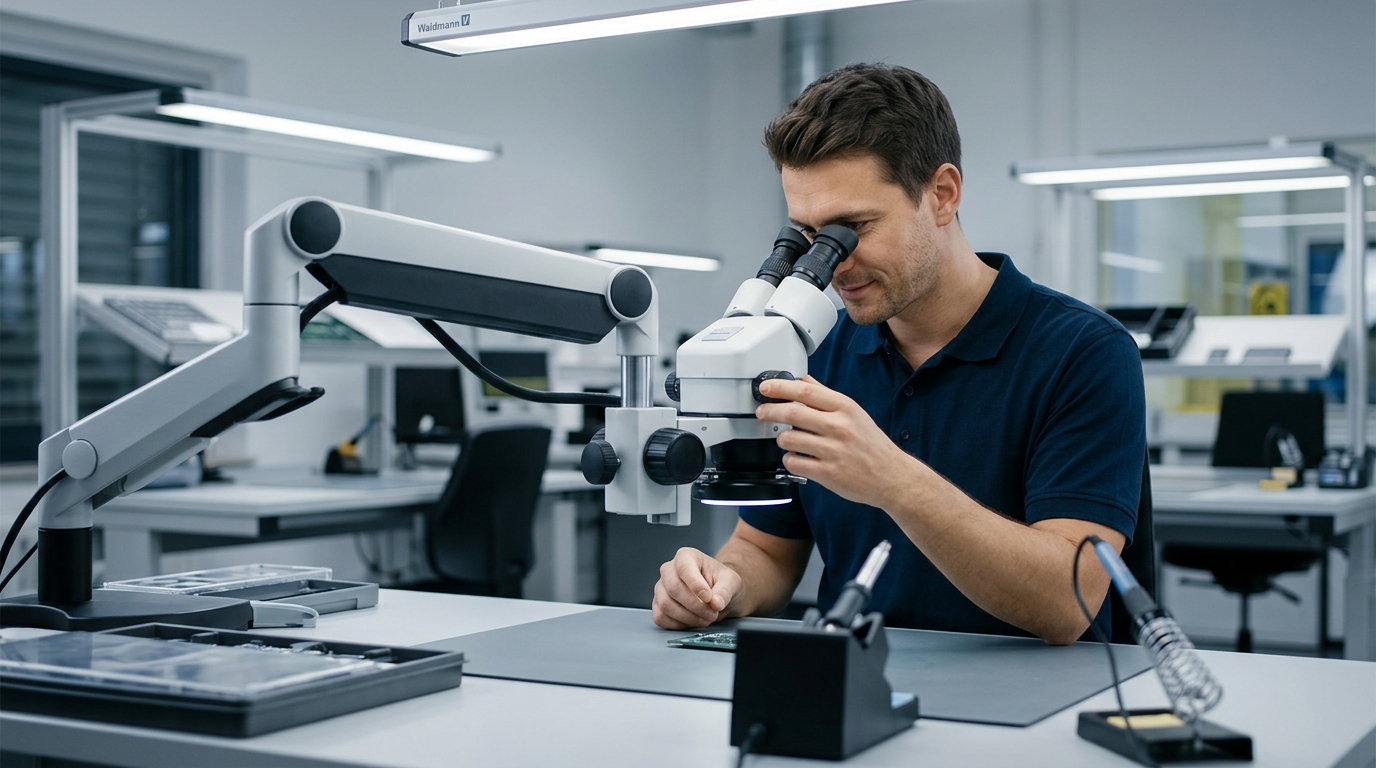
Ergonomics is the primary differentiator between a standard microscope and a professional-grade inspection tool. Poor posture leads to fatigue, reduced concentration, and increased error rates. An ergonomic workstation is designed to fit the worker, not the other way around, minimizing physical stress during long shifts.
Key ergonomic features include adjustable height and tilt mechanisms. The microscope head should be easily adjustable to accommodate operators of different heights. This prevents the need for hunching or stretching, which are common causes of neck and back pain. PK Elektronik provides ergonomic workstations that complement their optical equipment to create a holistic health solution.
Another critical aspect is the viewing angle. Binocular heads with interpupillary adjustment ensure that both eyes are aligned correctly, reducing eye strain. For extended inspection sessions, trinocular heads allow for camera attachment, enabling collaborative reviews or digital documentation. This feature is increasingly important in modern factories where data-driven quality control is standard.
Advanced Lighting Systems
Lighting is as important as optics in determining inspection accuracy. Inadequate lighting can hide defects, leading to costly shipping errors. Coaxial illumination is a technique where light is directed along the same axis as the viewing path, providing even illumination on reflective surfaces like solder joints.
Ring lights are another popular option, offering shadow-free illumination for flat surfaces. However, for 3D components, oblique lighting is often superior as it highlights surface textures and defects. PK Elektronik stocks a wide variety of specialized lighting solutions to match different inspection scenarios.
Color temperature also plays a role in defect detection. Cooler light temperatures (5000K to 6500K) are generally preferred for electronics inspection as they provide a neutral white light that enhances contrast. Warm light can distort colors, making it difficult to identify component markings or solder alloy types. Ensuring consistent lighting across all inspection stations is vital for standardized quality processes.
Integration with SMT Lines
In high-volume production environments, manual inspection must be integrated seamlessly with Surface Mount Technology (SMT) lines. The microscope should not be an isolated tool but part of a connected workflow. Digital microscopes with USB or HDMI outputs allow for real-time monitoring on large screens, facilitating quick decision-making.
Automation compatibility is another key consideration. Some microscopes can be integrated with automated test equipment (ATE) to perform routine inspections without human intervention. This reduces labor costs and increases throughput. PK Elektronik supports this integration by providing precision dosing systems and other automation accessories that work in tandem with inspection tools.
Data management is also crucial. Modern microscopes often come with software that logs inspection results, tracks defect trends, and generates reports. This data is invaluable for continuous improvement initiatives and compliance with industry standards such as ISO 9001. By leveraging these digital capabilities, manufacturers can achieve greater transparency and accountability in their quality assurance processes.
Comparison of Microscope Types
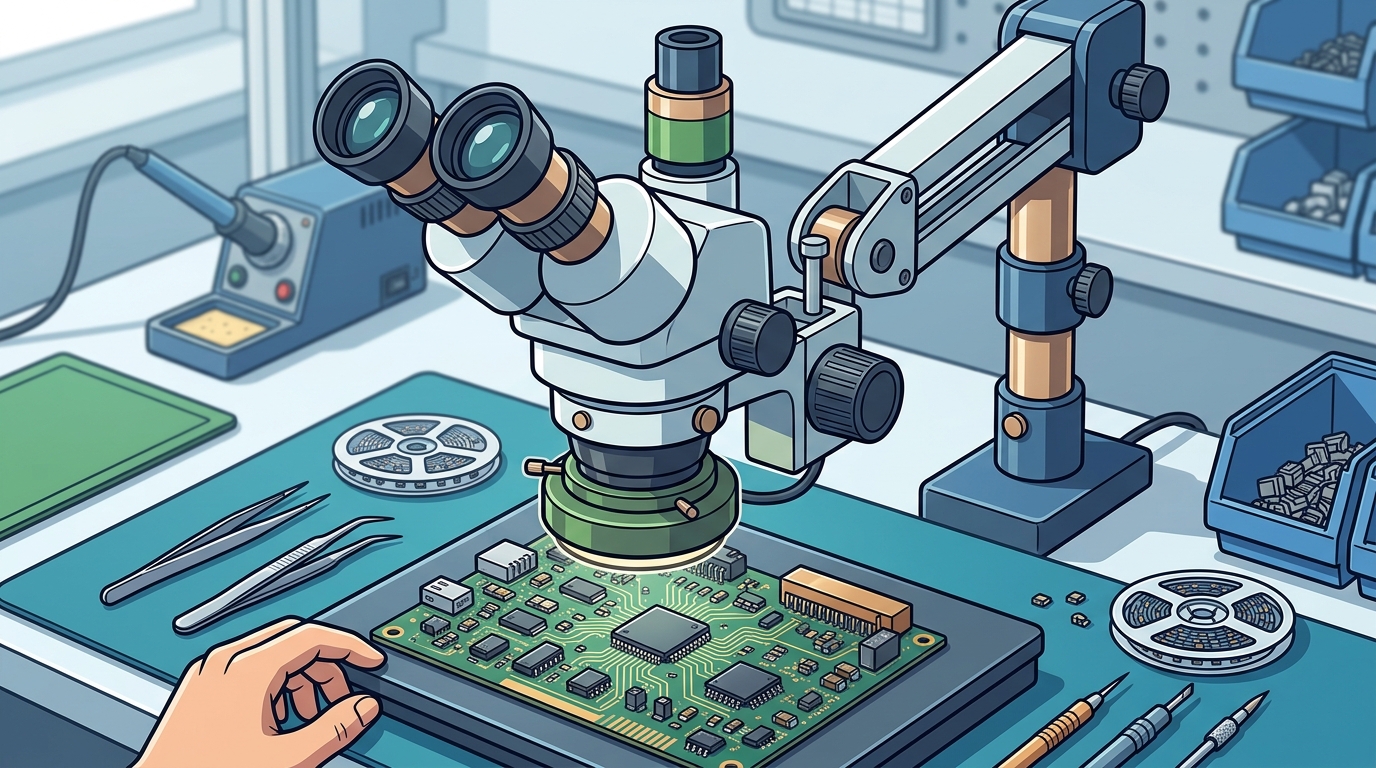
Selecting the right type of microscope depends on specific application requirements. Below is a comparison of common microscope types used in PCB manufacturing.
| Microscope Type | Best Use Case | Ergonomic Benefit | Typical Magnification |
|---|---|---|---|
| Stereo Microscope | General inspection and rework | 3D depth perception | 10x to 40x |
| Digital Microscope | Documentation and training | Reduced eye strain | Up to 200x |
| Binocular Headset | Mobile inspection | Hands-free operation | Variable |
| Trinocular Microscope | High-volume QA | Camera integration | 10x to 60x |
Key Takeaways
- Optical Clarity: High numerical aperture objectives are essential for resolving fine pitch components.
- Ergonomic Adjustability: Adjustable height and tilt mechanisms prevent operator fatigue and injury.
- Lighting Quality: Coaxial and oblique lighting options enhance defect detection on reflective surfaces.
- Digital Integration: USB/HDMI outputs enable real-time monitoring and data logging for quality control.
- Working Distance: Longer working distances facilitate easier tool manipulation during rework.
- Color Temperature: Neutral white light (5000K-6500K) provides the most accurate color representation.
- Brand Reliability: Partnering with established suppliers like PK Elektronik ensures access to premium German-engineered tools.
Frequently Asked Questions
What is the ideal magnification for PCB inspection?
The ideal magnification depends on the component density. Generally, 10x to 40x is sufficient for most SMT inspections, while higher magnifications are needed for BGA and fine-pitch components.
How does lighting affect inspection accuracy?
Proper lighting reduces shadows and enhances contrast, making defects like cold solder joints or bridging more visible. Incorrect lighting can lead to missed defects and increased rework.
Why is ergonomics important in microscope selection?
Ergonomics reduces physical strain on operators, leading to higher productivity and fewer injuries. Adjustable features ensure that the microscope fits the user's posture and working style.
Can inspection microscopes be integrated with automation?
Yes, many modern microscopes support digital outputs and software integration, allowing them to be part of automated quality control systems.
What is the difference between stereo and digital microscopes?
Stereo microscopes provide a 3D view through eyepieces, while digital microscopes display the image on a screen. Digital microscopes are better for documentation and training.
How often should microscope lenses be cleaned?
Lenses should be cleaned regularly to maintain optical clarity. Use specialized lens cleaning solutions and microfiber cloths to avoid damage.
What warranty options are available for industrial microscopes?
Warranty terms vary by manufacturer. PK Elektronik offers comprehensive support and service options for their range of inspection equipment.
Contact PK Elektronik for Expert Advice
Choosing the right inspection microscope is a critical investment for any German PCB manufacturer. PK Elektronik provides expert guidance and a wide range of high-quality optical tools to meet your specific needs. Contact us today to discuss your requirements and optimize your inspection process.
Visit our contact page to speak with our technical team.