
Key Standards and Selection Criteria for German ESD/EPA Equipment Suppliers
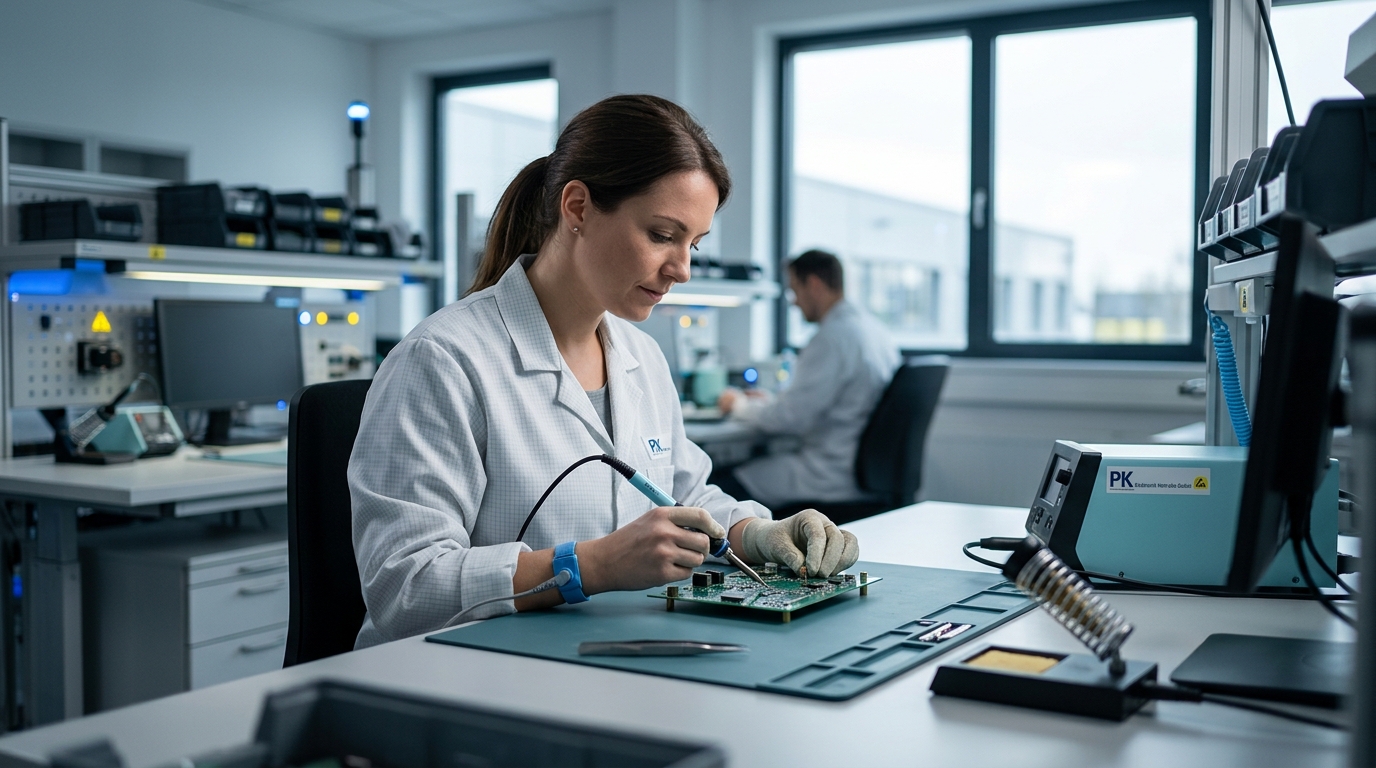
Establishing a compliant Electrostatic Discharge (ESD) protection area is not merely a best practice but a regulatory necessity for electronics manufacturing and repair facilities in Germany. According to recent industry compliance reports, over 60% of electronic component failures in high-precision environments are directly linked to undetected static discharge events. This statistic underscores the critical importance of selecting a supplier that understands the rigorous demands of the German market. PK Elektronik has positioned itself as a specialized provider for professional enterprises, ensuring that every component in your ESD protection arsenal meets strict industrial benchmarks. (ESD Schutz L tstationen)
Understanding ESD Standards and EPA Requirements
Before investing in hardware, it is vital to understand the regulatory framework governing electrostatic protection. In Germany and the broader European market, compliance is not optional. It is enforced through a combination of international standards and local labor safety regulations. (Bernstein)
ESD protection is the systematic prevention of static discharge damage to sensitive electronic components. The primary standard governing this field is DIN EN 61340-5-1. This standard outlines the requirements for the development of an Electrostatic Protection Area (EPA). An EPA is a defined space where all materials, equipment, and persons are grounded to prevent the accumulation of static charge. (Bernstein ESD Handling Set)
For German businesses, compliance also intersects with the Arbeitsschutzverordnung (Occupational Safety Ordinance). This regulation mandates that employers provide a safe working environment. In electronics assembly, this includes protecting both the worker from electrical hazards and the product from static damage. PK Elektronik adheres to these strict guidelines, ensuring that all inventory, from ESD mats to grounding cables, meets DIN EN 61340 specifications.
Another critical standard is DIN EN 61340-2-1, which deals with the measurement of surface resistance. This standard provides the methodology for verifying that work surfaces, flooring, and personnel grounding devices are functioning correctly. Without regular verification, an EPA becomes a liability rather than a safeguard.
Critical Selection Criteria for Suppliers
Choosing the right supplier for ESD equipment requires more than just comparing prices. It demands an evaluation of technical expertise, product range, and regulatory alignment. German industrial buyers have specific expectations regarding quality and service.
Technical expertise is the primary differentiator between a general hardware store and a specialized ESD supplier. A qualified supplier must understand the nuances of different ESD materials. For instance, knowing the difference between dissipative and conductive materials is crucial for setting up a valid EPA. PK Elektronik offers specialized consultation to help engineers and facility managers select the correct materials for their specific voltage levels and component sensitivities.
Another key criterion is the breadth of the product portfolio. A comprehensive supplier should offer everything from basic ESD footwear to advanced ionization systems. Ionizers are essential in areas where grounding is not possible, such as on plastic surfaces. The ability to source these specialized items from a single vendor simplifies logistics and ensures compatibility across the protection system.
Regulatory compliance is the third pillar. The supplier must provide documentation and certificates of conformity for all ESD products. This includes test reports for ESD mats, wrist straps, and flooring. In Germany, the shift towards B2B-only sales, as implemented by PK Elektronik in 2023, ensures that all customers are professional entities capable of managing these compliance requirements effectively.
Essential ESD Protection Equipment Categories
A complete ESD protection system relies on the integration of several key equipment categories. Each component plays a specific role in dissipating static charge safely to ground.
Personnel Grounding
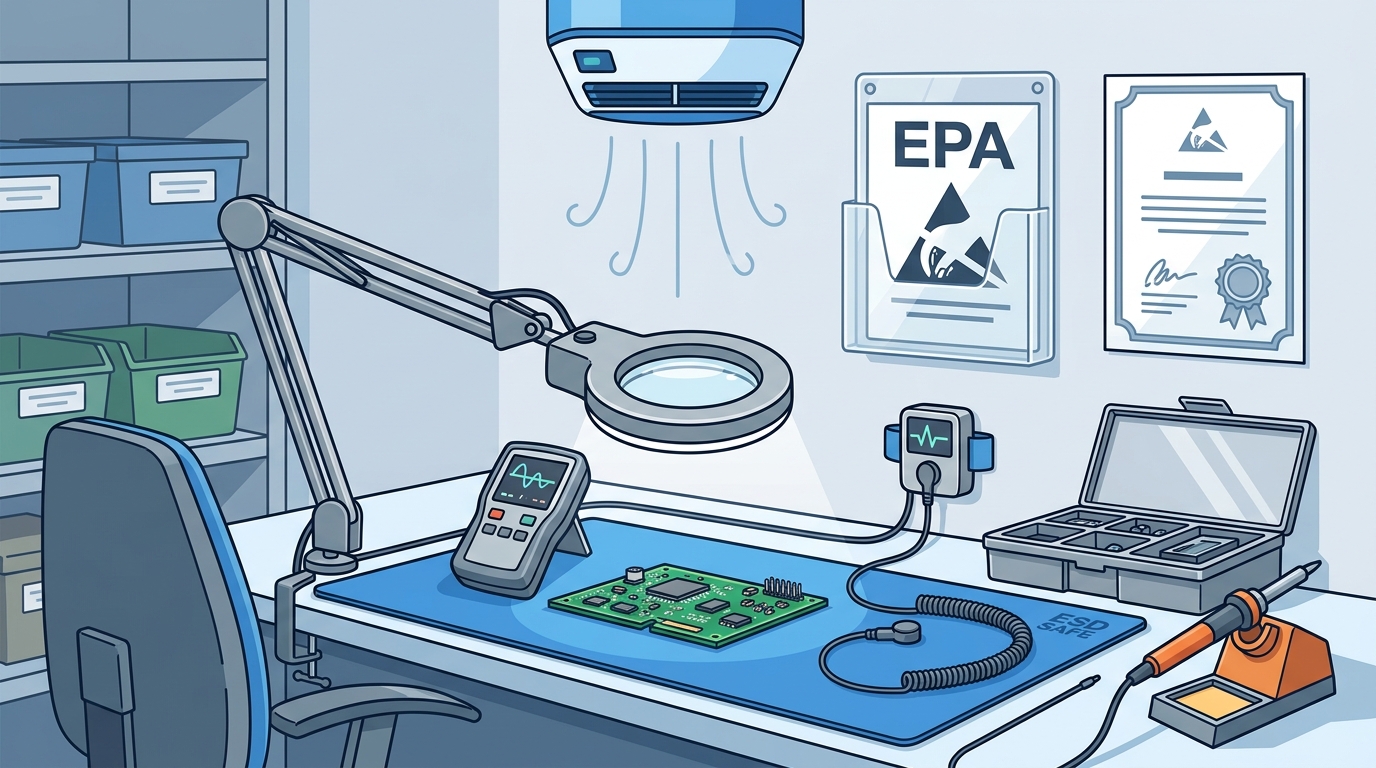
The human body is the most common source of static discharge. Therefore, personnel grounding is the first line of defense. This includes ESD wrist straps, heel straps, and ESD footwear. ESD wrist straps provide a direct connection to ground for the worker. Heel straps and ESD shoes work in tandem with conductive flooring to create a continuous grounding path for the body.
ESD wrist straps are wearable devices that connect the skin to a ground point, neutralizing static charge. They must be tested regularly for continuity. PK Elektronik stocks high-quality wrist straps and testers to ensure that your team remains compliant with daily safety checks.
Work Surface Protection
Work surfaces must be dissipative to prevent charge buildup on components. This includes ESD workbenches, mats, and tables. These surfaces are typically made of vinyl or rubber materials with specific surface resistance values, usually between 10^6 and 10^9 ohms.
ESD shelving and storage cabinets are also critical. Standard plastic bins can generate high voltages. ESD-safe bins, often pink or black in color, are designed to dissipate charge. PK Elektronik offers a range of ESD shelving units and cabinets that integrate seamlessly with your existing storage infrastructure.
Environmental Control
Ionizers are used to neutralize static charge on insulative materials that cannot be grounded. This is common in packaging and assembly lines. Ionization systems must be balanced to avoid over-ionization, which can damage sensitive components. PK Elektronik provides ionizers and balancers that meet DIN EN 61340-2-3 standards for ionization performance.
Soldering and Repair Station Specifications
Soldering is a high-risk activity for ESD damage. The soldering iron itself can generate static charge, and the heat can accelerate the effects of discharge. Therefore, soldering stations must be specifically designed for ESD safety.
ESD-safe soldering stations are equipped with grounded tips and internal circuitry that prevents static buildup. These stations often include features like temperature control, sleep modes, and quick heat-up times. PK Elektronik carries leading brands like Hakko and Weller, which are renowned for their precision and reliability in professional repair environments.
Desoldering equipment is equally important. Desoldering pumps and wicks must also be ESD-safe. The process of removing solder can generate static, so the tools must dissipate this charge. Additionally, fume extraction systems are necessary to protect the health of the operator. PK Elektronik offers a range of fume extractors that comply with German occupational safety standards for air quality.
Cleaning and Maintenance Protocols
Maintaining an EPA requires regular cleaning and inspection. Contaminants can compromise the effectiveness of ESD materials. For example, oil or dirt on an ESD mat can increase its surface resistance, rendering it non-compliant.
ESD cleaning agents are specialized solutions designed to clean without leaving conductive residues. Regular cleaners can leave behind films that attract dust or alter the electrical properties of ESD materials. PK Elektronik stocks ESD-safe cleaners and wipes that are safe for use on sensitive electronics and ESD surfaces.
Ultrasound cleaning is another critical aspect of maintenance. It is used to clean delicate components and tools without physical contact. The Bandelin SONOREX series, available at PK Elektronik, is a standard in the industry for precision cleaning. These units use high-frequency sound waves to remove contaminants from hard-to-reach areas.
Regular testing of ESD equipment is mandatory. This includes testing wrist straps, heel straps, and work surfaces. PK Elektronik provides testing equipment and reference materials to help you establish a robust maintenance schedule. This proactive approach ensures that your EPA remains compliant and effective over time.
Key Takeaways
- Regulatory Compliance: German ESD operations must adhere to DIN EN 61340-5-1 and local Arbeitsschutzverordnung standards to ensure safety and product integrity.
- Supplier Expertise: Choose a B2B-focused supplier like PK Elektronik that offers technical consultation and comprehensive documentation for all ESD products.
- Personnel Grounding: Implement a multi-layered grounding strategy using wrist straps, heel straps, and conductive flooring to neutralize human static discharge.
- Work Surface Integrity: Use dissipative ESD mats and tables with surface resistance between 10^6 and 10^9 ohms to protect components during assembly.
- Ionization Needs: Deploy ionizers in areas where grounding is impossible, such as on plastic packaging or insulative work surfaces.
- Specialized Soldering: Utilize ESD-safe soldering and desoldering stations with fume extraction to protect both components and operators.
- Maintenance Protocols: Conduct regular testing of ESD equipment and use specialized ESD cleaners to maintain compliance and equipment longevity.
Frequently Asked Questions
What is the minimum order value for ESD equipment?
PK Elektronik enforces a minimum order value of 40 euros for all transactions. This policy applies to the gross merchandise value before shipping costs and discounts.
Does PK Elektronik sell to private consumers?
No. Since January 1, 2023, PK Elektronik sells exclusively to businesses, self-employed professionals, and public institutions. They no longer sell to consumers as defined by § 13 BGB.
What standards do ESD mats need to meet?
ESD mats must comply with DIN EN 61340-2-5. They typically have a surface resistance of 10^6 to 10^9 ohms and must be connected to a ground point.
How often should ESD wrist straps be tested?
ESD wrist straps should be tested daily or at the start of each shift. Regular testing ensures that the strap and cord are functioning correctly and providing a continuous ground path.
What is the difference between ESD and EPA?
ESD stands for Electrostatic Discharge, which is the event of static electricity moving between objects. EPA stands for Electrostatic Protection Area, which is the designated space where ESD protection measures are implemented.
Are ionizers necessary for all electronics work?
Ionizers are necessary in areas where grounding is not possible, such as on plastic surfaces. They neutralize static charge on insulative materials that cannot be grounded.
What types of cleaning agents are safe for ESD surfaces?
Only ESD-safe cleaning agents should be used. These are designed to clean without leaving conductive residues or altering the electrical properties of the ESD materials.
Partner with PK Elektronik
Establishing a robust ESD protection strategy requires more than just buying equipment. It requires a partner who understands the technical and regulatory landscape of the German market. PK Elektronik provides the comprehensive range of ESD protection, soldering, and cleaning tools needed to build and maintain a compliant EPA.
As a B2B-focused supplier, PK Elektronik ensures that every product meets the highest standards of quality and safety. From ESD mats and wrist straps to advanced soldering stations and ionizers, they offer the complete solution for professional electronics manufacturing and repair.
Visit PK Elektronik to explore their full catalog of ESD protection equipment. Contact their team at PK Elektronik Contact for specialized consultation on setting up your ESD protection area. Ensure your facility is compliant and your products are safe with PK Elektronik.