

Workshop Lighting Guide: Selecting the Right Beleuchtung for Precision Tasks
Choosing the right workshop lighting requires balancing brightness, color temperature, and environmental protection to ensure visual comfort and safety. PK Elektronik Vertriebs GmbH provides specialized lighting solutions for commercial users, helping you select fixtures that reduce eye strain and enhance detail visibility. This guide covers the essential technical parameters, including lumens, Kelvin ratings, and IP protection classes, to help you make an informed decision for your specific workspace. For additional details, review the Kontaktieren Sie uns.
LED Brightness and Lumens
LED brightness is measured in lumens, which indicates the total amount of visible light emitted by a source. For workshop environments, the required lumen output depends on the specific task and the size of the area being illuminated. General workshop lighting typically requires between 300 and 500 lux, while precision tasks such as soldering or inspection may require higher levels of localized illumination. For additional details, review the ESD Schutz L tstationen.
Task-Specific Illumination Levels
Efficiency and Energy Consumption
LED technology provides high efficacy, meaning more lumens per watt compared to traditional lighting. This efficiency reduces energy costs over time, which is a significant factor for commercial operations. When comparing fixtures, look for the lumen-per-watt ratio to ensure you are getting the most light for the energy consumed. This metric is crucial for maintaining a sustainable and cost-effective lighting setup in your facility. For additional details, review the Erem.
Color Temperature and Kelvin
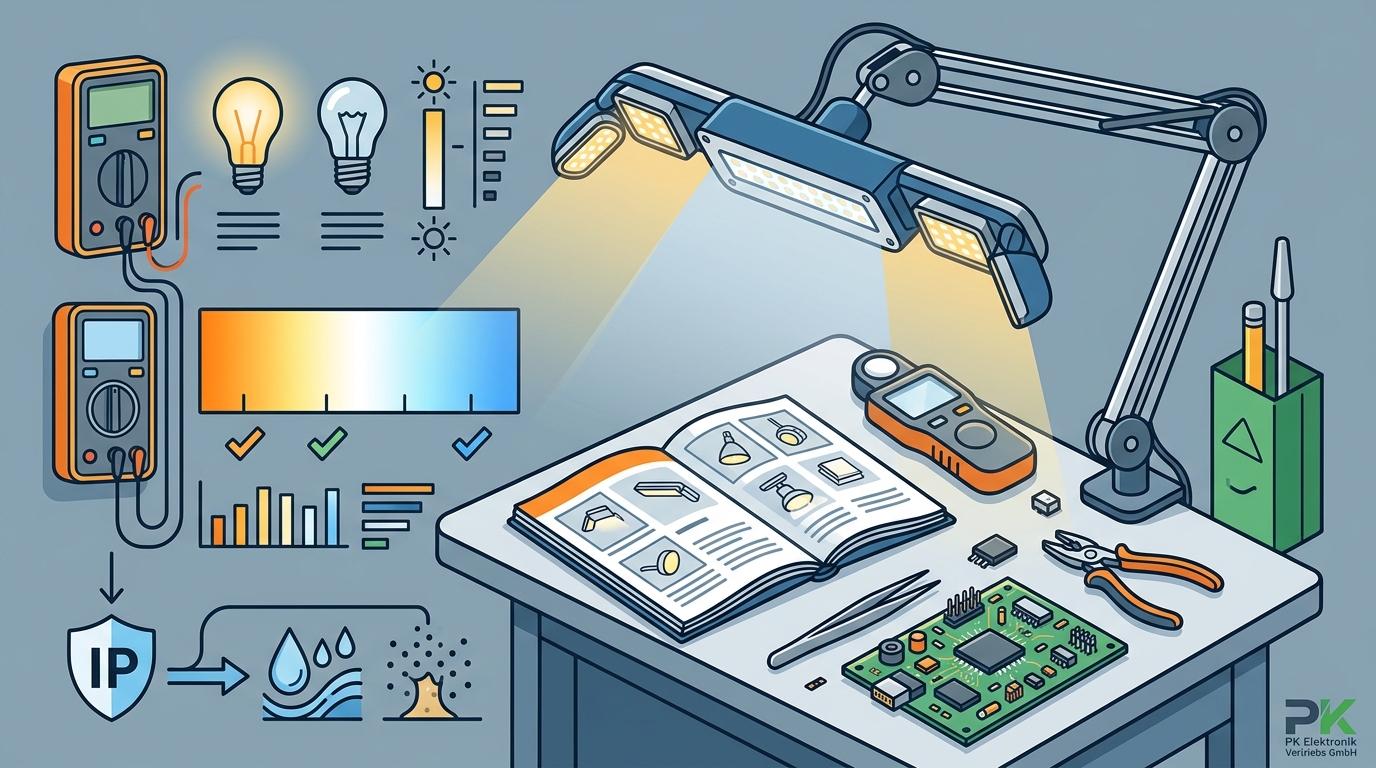
Color temperature is measured in Kelvin (K) and describes the hue of the light emitted by a source. Lower Kelvin values produce a warm, yellowish light, while higher values produce a cool, bluish light. For workshop applications, a neutral white light between 4000K and 5000K is generally recommended to provide a natural appearance of colors and reduce eye fatigue. For additional details, review the FLIR W rmebildkameras Infrarotkameras.
Impact on Visual Comfort
The choice of color temperature affects how well you can distinguish between different components and materials. A neutral white light helps in identifying color-coded wires, resistors, and other electronic parts accurately. Avoiding extreme warm or cool tones can prevent visual distortion, which is critical for quality control and precision work. PK Elektronik Vertriebs GmbH stocks fixtures with various color temperature options to suit different operational needs. For additional details, review the PELI Schutzkoffer LED Taschenlampen.
CRI and Color Rendering
While color temperature defines the hue, the Color Rendering Index (CRI) determines how accurately colors are displayed under the light. A high CRI value, typically above 80, ensures that objects appear in their true colors. This is essential for tasks where color accuracy is paramount, such as inspecting printed circuit boards or matching paint samples. Always check the CRI rating when selecting a light source for detailed work.
Shadow and Glare Reduction
Shadow and glare reduction is critical for maintaining visual clarity and preventing eye strain in a workshop environment. Poorly designed lighting can create harsh shadows that obscure details or cause glare that makes it difficult to focus on small components. Selecting fixtures with diffusers or adjustable angles can help mitigate these issues.
Diffusion and Beam Control
Positioning and Ergonomics
Dust and Moisture Ratings
Understanding IP Codes
Environmental Considerations
Consider the specific hazards present in your workshop when selecting an IP rating. If your facility involves wet processes or is located in a humid area, a higher moisture protection rating is advisable. Similarly, if your work generates significant dust or debris, a higher dust protection rating will help maintain the performance of the light. Always consult the manufacturer's documentation to ensure the selected fixture meets the requirements of your operating environment.
Comparison of Lighting Parameters
| Parameter | Typical Range | Recommended for Precision Work | Key Benefit |
|---|---|---|---|
| Lumens | 300 - 1000+ | High (500+) | Enhanced visibility of small details |
| Color Temperature | 3000K - 6500K | 4000K - 5000K | Natural color appearance, reduced eye strain |
| CRI | 80 - 95 | 90+ | Accurate color rendering |
| IP Rating | IP20 - IP65 | IP54 or higher | Protection against dust and moisture |
Key Takeaways
- LED brightness is measured in lumens, and higher outputs are needed for precision tasks.
- Color temperature between 4000K and 5000K provides a neutral white light ideal for workshops.
- A high CRI value ensures accurate color rendering, which is critical for quality control.
- Shadow and glare reduction can be achieved through proper fixture positioning and diffusion.
- IP ratings indicate protection against dust and moisture, which is essential for workshop environments.
- Always consult manufacturer documentation to ensure the selected fixture meets your specific needs.
Frequently Asked Questions
What is the ideal lumen output for a workshop light?
How does color temperature affect visual comfort?
Color temperature affects the hue of the light, with neutral white light (4000K to 5000K) being recommended for workshops. This range provides a natural appearance of colors and reduces eye fatigue, making it ideal for detailed work.
What is the importance of CRI in workshop lighting?
The Color Rendering Index (CRI) determines how accurately colors are displayed under the light. A high CRI value, typically above 80, ensures that objects appear in their true colors, which is essential for tasks where color accuracy is paramount.
How can I reduce shadows and glare in my workshop?
Shadows and glare can be reduced by selecting fixtures with diffusers or adjustable angles. Proper positioning of the light source relative to the work surface also plays a significant role in minimizing shadows and improving visibility.
What IP rating should I choose for a dusty workshop?
For a dusty workshop, an IP rating of IP54 or higher is recommended. This level of protection ensures that the fixture remains functional and safe even in environments with significant dust or debris.
Where can I find specialized workshop lighting?
Conclusion
Selecting the right workshop lighting involves a careful consideration of brightness, color temperature, shadow reduction, and environmental protection. By understanding these key parameters, you can create a lighting setup that enhances visual comfort, improves productivity, and ensures safety in your facility. PK Elektronik Vertriebs GmbH is committed to providing high-quality lighting solutions for commercial users, helping you make informed decisions for your workshop. To explore the full range of lighting options available, visit PK Elektronik and find the perfect fixture for your needs.