

Common Mistakes When Choosing Ergonomic Inspection Microscopes for PCB Assembly
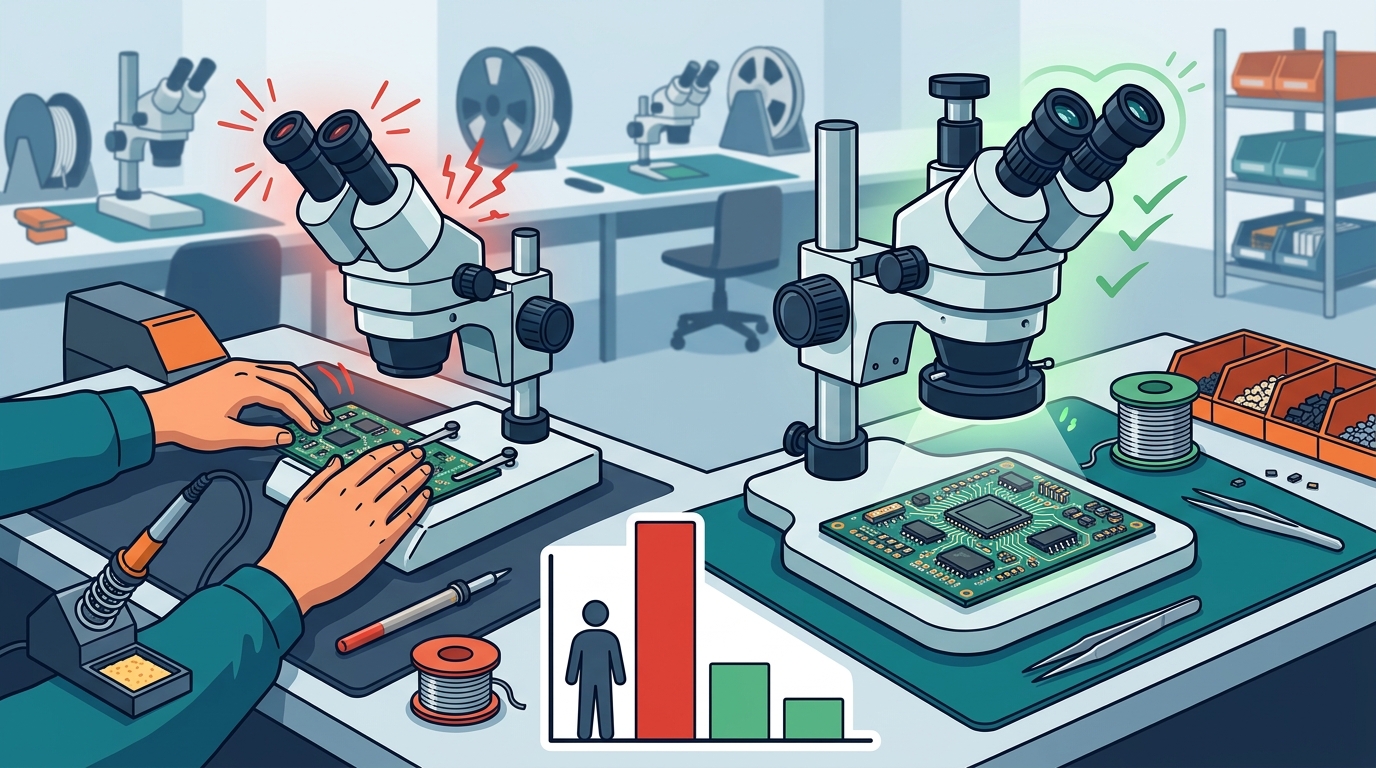
Electronics manufacturing faces increasing pressure to maintain precision while protecting worker health. According to recent industrial safety reports, musculoskeletal disorders account for nearly 30% of all workplace injuries in electronics assembly lines. This statistic highlights the critical need for proper ergonomic equipment. Choosing the wrong inspection microscope can lead to chronic neck strain, eye fatigue, and reduced production quality. This guide outlines the most frequent errors buyers make when selecting inspection optics for PCB assembly environments.
Understanding Magnification and Depth of Field
One of the most common mistakes is selecting a microscope based solely on maximum magnification. Buyers often assume that higher magnification always equals better inspection. This is a dangerous misconception. High magnification significantly reduces the depth of field. When inspecting complex PCBs with varying component heights, a shallow depth of field forces the operator to constantly refocus. This constant adjustment causes severe eye strain and slows down the inspection process.
Instead, focus on the working distance and the optical clarity of the objective lens. A microscope with a longer working distance allows for easier manipulation of tools and components. It also reduces the risk of accidentally damaging sensitive PCB traces. For general PCB assembly, a magnification range of 10x to 40x is often sufficient. Higher magnifications should only be used for fine-pitch BGA components or micro-soldering tasks.
Another critical factor is the parfocal design. A parfocal microscope maintains focus when changing magnification levels. This feature is essential for efficient workflow. It allows inspectors to switch between wide-area views and detailed inspections without losing their place. Without parfocal optics, the inspection process becomes tedious and prone to error.
Ignoring Ergonomic Design Flaws
Ergonomics is the core reason for investing in specialized inspection equipment. Many buyers overlook the importance of adjustable瞳距 (interpupillary distance) and diopter settings. If the microscope does not accommodate different user eye distances, it causes immediate visual discomfort. Over time, this leads to headaches and reduced concentration.
The viewing angle is equally important. Binocular microscopes are standard, but trinocular heads offer flexibility for documentation. A trinocular port allows for the attachment of a camera system. This is crucial for quality control documentation and training purposes. However, the weight of the camera attachment must be balanced properly. An unbalanced microscope head forces the operator to hold the device steady, leading to arm and shoulder fatigue.
The stand stability is another often-overlooked ergonomic factor. A wobbly microscope stand introduces vibration into the image. This vibration makes it difficult to see fine details clearly. A heavy, solid base is necessary to maintain image stability. Additionally, the boom arm or pillar height must be adjustable. This allows the microscope to be positioned at the optimal height for the operator's seated position. Proper positioning ensures that the operator's neck remains in a neutral posture.
Overlooking Lighting Deficiencies
Lighting is the foundation of visual inspection. Poor lighting leads to missed defects and inaccurate color assessment. A common mistake is relying on ambient room light alone. Even with high-end optics, insufficient illumination renders the microscope useless for detailed work.
Ring lights are the most popular choice for PCB inspection. They provide even, shadow-free illumination. However, not all ring lights are created equal. The color temperature of the light source matters significantly. A color temperature of 5000K to 6500K mimics natural daylight. This allows for accurate assessment of solder joint quality and component colors. Lights with a lower color temperature can distort colors, leading to misidentification of components.
Intensity adjustability is another critical feature. Different PCBs and components reflect light differently. A solder mask might reflect light differently than a bare copper trace. The ability to dim the light source allows the operator to optimize contrast for each specific task. Without dimming capability, glare can obscure critical details. Some advanced microscopes offer coaxial lighting. This type of lighting is ideal for inspecting highly reflective surfaces. It eliminates shadows and highlights surface irregularities.
Neglecting ESD Safety Compliance
In the electronics industry, Electrostatic Discharge (ESD) safety is non-negotiable. Many buyers choose microscopes based on price and optics, ignoring the ESD rating of the equipment. A standard plastic microscope can accumulate static charge. This charge can discharge onto sensitive PCB components, causing latent damage or immediate failure.
Always select microscopes that are explicitly rated for ESD safety. These devices are constructed with conductive materials that ground static electricity safely. The stand, the arm, and the viewing head must all be part of the ESD-safe chain. Check for certification marks such as IEC 61340-2-1. This standard ensures that the equipment meets strict ESD safety requirements.
Additionally, consider the accessories. The eyepieces should be made of anti-static material. The stage and any clamps used to hold the PCB must also be ESD-safe. If the microscope is used in a cleanroom environment, it must also meet cleanroom compatibility standards. This includes outgassing properties and particle generation limits. PK Elektronik specializes in providing ESD-safe solutions for such environments. Their range includes microscopes designed specifically for sensitive electronics handling.
Comparison of Microscope Types
Choosing the right form factor is as important as choosing the right optics. Different PCB assembly tasks require different microscope configurations. The table below compares the most common types used in electronics manufacturing.
| Microscope Type | Best Use Case | Ergonomic Benefit | ESD Safety Consideration |
|---|---|---|---|
| Stereo Microscope | General PCB assembly and soldering | 3D depth perception for precise manipulation | Must have grounded conductive body |
| Digital Microscope | Documentation and remote inspection | Reduces eye strain via screen viewing | Camera sensor must be ESD protected |
| Borescope | Inspecting confined spaces | Flexible positioning in tight areas | Tip must be non-sparking and grounded |
| Portable Inspection Microscope | Field service and repair | Lightweight and easy to transport | Battery compartment must be insulated |
Key Takeaways
- Higher magnification does not always equal better inspection. Prioritize depth of field and working distance.
- Ergonomic adjustments are critical. Ensure the microscope accommodates different user eye distances and viewing angles.
- Lighting quality affects accuracy. Use ring lights with adjustable intensity and correct color temperature.
- ESD safety is mandatory. Always choose microscopes certified for ESD environments to protect sensitive components.
- Documentation capabilities add value. Trinocular heads allow for camera attachment for quality control.
- Stand stability prevents vibration. A heavy base ensures a clear, steady image during detailed work.
- Consider the total cost of ownership. Include accessories like ESD-safe stands and specialized lighting in your budget.
Frequently Asked Questions
What is the ideal magnification for PCB inspection?
The ideal magnification depends on the component size. For general assembly, 10x to 40x is sufficient. For fine-pitch components, higher magnification may be needed, but depth of field will decrease.
How do I ensure my microscope is ESD safe?
Look for explicit ESD certification marks such as IEC 61340-2-1. Ensure all parts, including eyepieces and stands, are made of conductive, grounded materials.
Why is lighting color temperature important?
Color temperature affects color accuracy. A temperature of 5000K to 6500K mimics natural daylight, allowing for accurate assessment of solder joints and component colors.
What is the difference between a stereo and digital microscope?
A stereo microscope provides a 3D view through eyepieces. A digital microscope displays the image on a screen. Digital microscopes are better for documentation and reducing eye strain.
Can I use a standard microscope in an electronics lab?
No. Standard microscopes can generate static charge. This charge can damage sensitive electronic components. Always use an ESD-safe microscope.
How often should I calibrate my inspection microscope?
Calibration frequency depends on usage. Regular calibration ensures accurate measurements. Follow the manufacturer's recommendations for maintenance.
What accessories are essential for PCB inspection?
Essential accessories include ESD-safe stands, adjustable ring lights, and precision tweezers. A trinocular head is also useful for documentation.
How does working distance affect inspection?
A longer working distance allows for easier tool manipulation. It also reduces the risk of damaging the PCB or the microscope objective.
Next Steps
Investing in the right inspection microscope is crucial for maintaining quality and protecting your workforce. Avoid the common mistakes outlined in this guide by prioritizing ergonomics, lighting, and ESD safety. PK Elektronik offers a comprehensive range of ESD-safe inspection microscopes and accessories. Visit our ESD Protection section to explore our certified products. Contact our team today to discuss your specific requirements and ensure your PCB assembly line operates at peak efficiency.