
Weller Soldering Stations: Temperature Control and Precision Guide
Weller soldering stations differ significantly in temperature control and precision based on their heating mechanisms, stability specs, and control interfaces. This guide compares Weller models by analyzing tip heating, thermal stability, and heat recovery. PK Elektronik Vertriebs GmbH provides these professional tools for commercial users. We cover the technical factors that define soldering accuracy in industrial and workshop environments.
Tip Heating Mechanisms
Weller utilizes distinct heating technologies to manage thermal output. The primary mechanism is resistive heating, where an electrical current passes through a resistive element inside the soldering tip. This method is standard in most Weller stations. The heat is generated directly at the tip, ensuring efficient energy transfer to the workpiece. This direct generation minimizes heat loss between the heating element and the solder joint.
Resistive Heating Elements
Resistive heating is the backbone of Weller's product line. The element is typically made of a high-resistance alloy. When current flows, the alloy heats up. This heat conducts to the tip surface. The design allows for rapid temperature changes. The element is often integrated into the tip cartridge itself. This integration reduces thermal mass and improves response time.
Thermal Efficiency
Thermal efficiency determines how much electrical energy converts to useful heat at the tip. Weller designs focus on minimizing heat loss to the handle. Insulation materials separate the heating element from the user's hand. This ensures that the majority of energy goes into the solder joint. Efficient heating reduces power consumption and extends the life of the tip.
Temperature Stability Specifications
Temperature stability is the ability of a soldering station to maintain a set temperature under varying conditions. Weller stations are designed to minimize temperature drift. Drift occurs when the tip temperature deviates from the set point. High stability ensures consistent solder joint quality. It prevents cold solder joints and thermal damage to components.
Temperature Drift
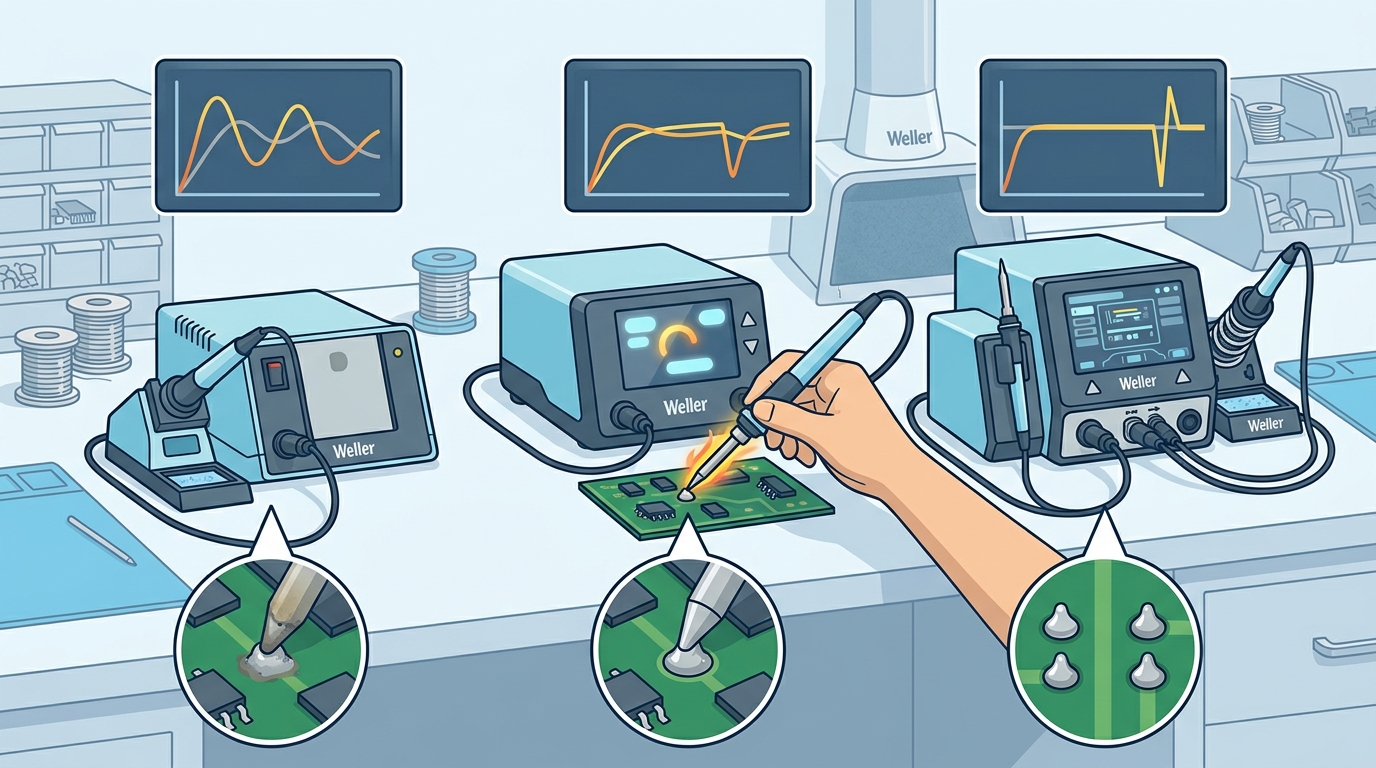
Temperature drift is the gradual change in tip temperature over time. Factors like oxidation and heat loss cause drift. Weller stations use feedback loops to correct drift. The system measures the actual tip temperature and adjusts power accordingly. This active correction keeps the temperature within a tight tolerance. Low drift is critical for precision electronics assembly.
Thermal Tolerance
Thermal tolerance defines the acceptable range of temperature variation. Weller specifications often cite a tolerance of plus or minus a few degrees Celsius. This range ensures that the solder melts at the correct rate. A narrow tolerance indicates a high-precision instrument. It is essential for working with fine-pitch components and sensitive circuits.
Model Tier Classifications
Weller categorizes its soldering stations into different tiers based on features and performance. These tiers help users select the right tool for their needs. The classification system reflects the complexity of the control system and the heating technology used.
| Tier | Typical Features | Intended Use |
|---|---|---|
| Entry Level | Basic temperature control, manual adjustment | General repair, hobbyist use |
| Mid Range | Digital display, preset temperatures, better stability | Professional repair, small batch production |
| High End | Advanced feedback, rapid heat recovery, multiple presets | High-volume production, precision electronics |
Temperature Adjustment Granularity
Increment Steps
Increment steps define the resolution of the temperature control. Some Weller models allow adjustments in 1-degree increments. Others may use 5-degree or 10-degree steps. Finer increments provide greater control. They allow the user to dial in the exact temperature needed for a specific task. This precision is vital for avoiding thermal stress on components.
User Interface Impact
Heat Recovery Time
Heat recovery time is the duration it takes for a soldering tip to return to its set temperature after a soldering operation. This metric is critical for productivity. When a tip loses heat to a component, it must regain that heat quickly. Weller stations vary in their heat recovery capabilities. Faster recovery reduces downtime between joints.
Thermal Mass
Power Output
Heat Recovery Speed
Heat recovery speed is closely related to heat recovery time but focuses on the rate of temperature change. It measures how quickly the tip temperature rises after a drop. This speed is influenced by the heating element's design and the station's power supply. Weller stations are engineered to optimize this speed for consistent performance.
Dynamic Response
Dynamic response describes how the station reacts to changes in heat demand. A station with good dynamic response can quickly adjust power output. It compensates for heat loss in real-time. This capability is essential for maintaining temperature stability during continuous soldering. It ensures that the tip temperature remains constant throughout the process.
Impact on Workflow
Heat recovery speed directly impacts the workflow of the operator. Faster recovery allows for more joints to be completed in a given time. It reduces the need for waiting between operations. This efficiency is particularly important in production environments. It contributes to higher throughput and lower labor costs.
Tip Cartridge Technology
Modular Design
Modular design enables users to swap tips quickly. This flexibility is useful for different soldering tasks. Users can select a tip shape that suits the specific joint. The cartridge ensures proper electrical and thermal contact. It simplifies the maintenance process and reduces downtime. Modular tips extend the life of the station by allowing worn tips to be replaced.
Compatibility
Control Interfaces
Digital Displays
Preset Management
Key Takeaways
- Weller stations use resistive heating for efficient and direct heat generation at the tip.
- Temperature stability is critical for consistent solder joint quality and preventing component damage.
- Model tiers range from entry-level to high-end, offering varying levels of precision and features.
- Temperature adjustment granularity allows for fine-tuning of heat output to suit specific tasks.
- Heat recovery time and speed are key metrics for productivity and workflow efficiency.
- Tip cartridge technology enables modular design and easy maintenance of soldering tips.
- Control interfaces, including digital displays and preset management, enhance usability and precision.
Frequently Asked Questions
What is the main difference between Weller entry-level and high-end stations?
How does temperature stability affect soldering quality?
High temperature stability ensures consistent heat output, which prevents cold solder joints and thermal damage to components. It is essential for precision electronics.
What is heat recovery time?
Heat recovery time is the duration it takes for a soldering tip to return to its set temperature after a soldering operation. Faster recovery improves productivity.
Can I use any tip cartridge with any Weller station?
No, tip cartridges are model-specific. Users must select the correct cartridge type for their station to ensure proper compatibility and performance.
What is temperature adjustment granularity?
Temperature adjustment granularity refers to the smallest increment by which a user can change the set temperature. Finer increments allow for more precise control.
Why is thermal mass important in soldering tips?
Thermal mass determines how much heat a tip can store. It affects heat retention and recovery speed. A balanced thermal mass is ideal for consistent performance.
How do digital displays improve soldering?
Digital displays provide clear readouts of temperature and status. They reduce ambiguity and enhance the precision of temperature management.
Where can I buy Weller soldering stations?
Conclusion
Understanding the technical differences between Weller soldering stations is essential for selecting the right tool. Factors like heating mechanisms, stability, and heat recovery define performance. PK Elektronik Vertriebs GmbH provides a comprehensive range of Weller products for commercial users. Explore the Weller soldering stations available at PK Elektronik to find the right fit for your workshop. For additional tools, check out the Weller soldering irons and Weller soldering tips. PK Elektronik serves businesses, commercial enterprises, freelancers, and public institutions with high-quality electronic equipment.