
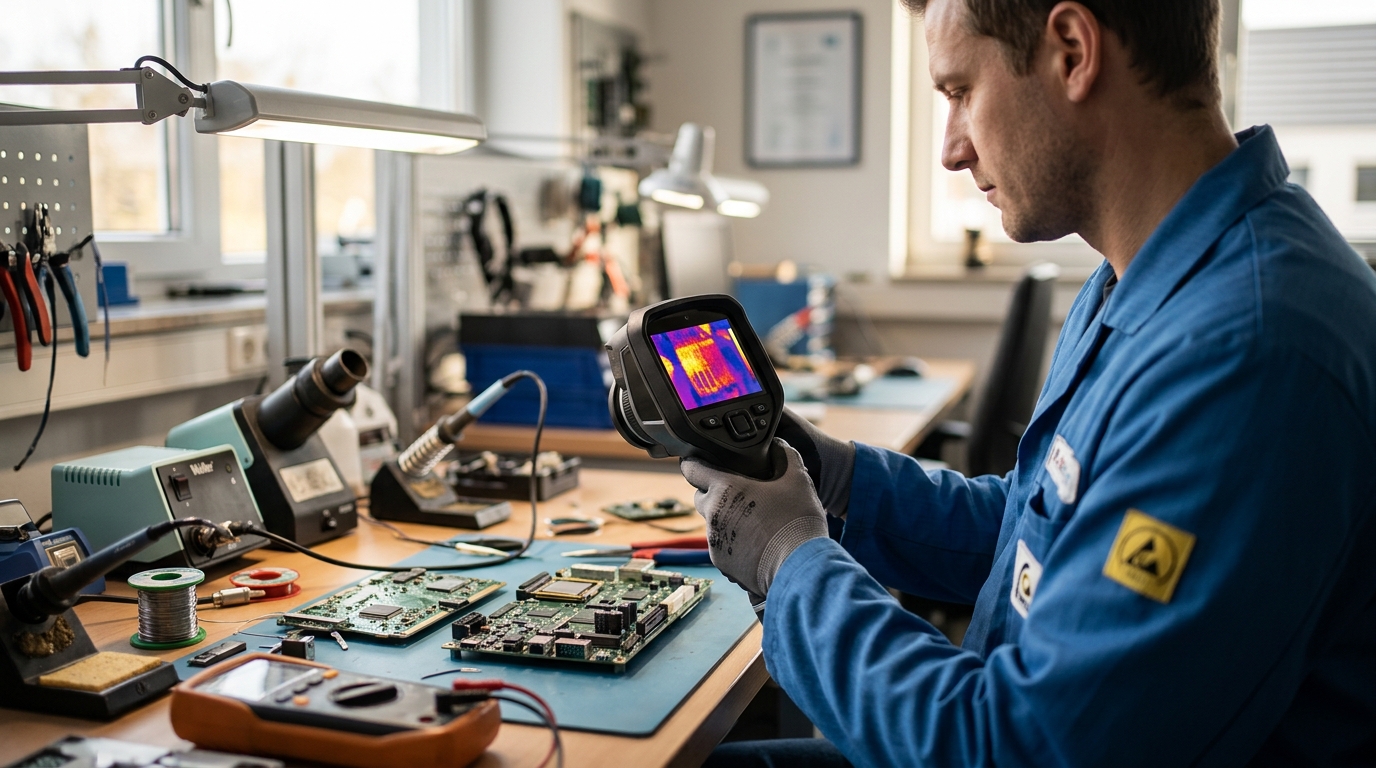
Thermal Imaging Camera Pricing and ROI for German Electronics Maintenance
Thermal imaging technology has shifted from a luxury diagnostic tool to a mandatory asset for professional electronics maintenance in Germany. According to recent industry data, the adoption of infrared thermography in industrial diagnostics has grown by over 15% annually, driven by the need to prevent catastrophic component failure. For German technicians, understanding the true cost of these devices and their long-term financial impact is critical for operational efficiency. (ESD Schutz L tstationen)
Thermal Camera Pricing Structure
The market for thermal imaging cameras in the German B2B sector is segmented by resolution, frame rate, and specialized features. Prices vary significantly based on whether the device is intended for basic visual inspection or advanced predictive maintenance. (Bernstein)
Entry-Level Professional Models
Entry-level thermal cameras typically range from 800 to 1,500 Euros. These devices often feature resolutions of 80x60 or 160x120 pixels. They are suitable for basic troubleshooting, such as identifying overheating solder joints or checking for cold solder connections in PCB repair. While affordable, these models lack the precision required for complex board-level diagnostics. (Bernstein ESD Handling Set)
Mid-Range Diagnostic Tools
Mid-range cameras, priced between 1,500 and 3,500 Euros, offer resolutions of 320x240 or 640x480 pixels. These devices provide the thermal sensitivity needed to detect micro-fractures in traces and verify the integrity of BGA (Ball Grid Array) rework. For German electronics firms, this price point represents the sweet spot for professional repair shops and industrial maintenance teams.
High-End Industrial Solutions
High-end thermal imaging systems cost between 4,000 and 10,000+ Euros. These units feature high frame rates, advanced spectral analysis, and integration with software suites for detailed reporting. They are essential for high-volume manufacturing environments where downtime costs exceed the equipment investment.
Thermal imaging is the process of using infrared sensors to detect heat patterns invisible to the human eye. This definition highlights the core utility of the device in electronics maintenance.
Calculating Return on Investment
The return on investment (ROI) for thermal imaging cameras is derived from two primary sources: time savings in diagnostics and the prevention of costly equipment failures.
Diagnostic Time Savings
Traditional troubleshooting methods, such as visual inspection or multimeter testing, are time-consuming. A thermal camera allows technicians to visualize current flow and heat generation instantly. According to industry reports, thermal diagnostics can reduce troubleshooting time by up to 50%. For a German electronics firm with a labor cost of 50 Euros per hour, this efficiency gain translates to significant annual savings.
Prevention of Component Failure
Identifying hot spots before they cause failure is the most valuable aspect of thermal imaging. A single failed high-value component, such as a power supply unit or a server motherboard, can cost thousands of Euros in replacement and downtime. By detecting overheating capacitors or failing transistors early, the thermal camera pays for itself after just one or two prevented failures.
Predictive maintenance is the strategy of monitoring equipment condition to predict when maintenance should be performed. This approach minimizes unplanned downtime and extends the lifespan of critical electronics.
ESD Safety and Thermal Tools
In the German electronics industry, ESD (Electrostatic Discharge) safety is non-negotiable. When using thermal cameras for PCB inspection, technicians must ensure that the camera itself does not introduce ESD risks or interfere with the ESD-safe environment.
ESD-Safe Camera Accessories
PK Elektronik offers a range of ESD-safe accessories, including ESD grounding straps and mats, which are essential when working with sensitive components. While thermal cameras are generally non-conductive, the probes and accessories used in conjunction with them must be ESD-safe. Using ESD wrist straps ensures that the technician remains grounded while handling sensitive PCBs during thermal analysis.
Integration with ESD Workstations
Thermal imaging should be integrated into a broader ESD protection strategy. This includes using ESD mats and ESD footwear to maintain a consistent potential between the technician and the work surface. This holistic approach prevents static discharge from damaging the very components the thermal camera is helping to diagnose.
ESD protection is the set of procedures and equipment used to prevent damage to electronic components from static electricity. This definition underscores the critical link between safety protocols and equipment longevity.
Camera Comparison Matrix
The following table compares key thermal imaging camera categories relevant to German electronics maintenance.
| Category | Resolution | Price Range (EUR) | Best Use Case |
|---|---|---|---|
| Entry-Level | 80x60 / 160x120 | 800 - 1,500 | Basic visual inspection |
| Mid-Range | 320x240 / 640x480 | 1,500 - 3,500 | PCB repair and BGA analysis |
| High-End | 640x480+ | 4,000 - 10,000+ | Industrial predictive maintenance |
Key Takeaways
- Thermal imaging cameras reduce diagnostic time by up to 50% in professional electronics repair.
- Mid-range cameras (1,500-3,500 EUR) offer the best balance of resolution and cost for PCB work.
- ESD safety protocols must be maintained when using thermal tools in sensitive environments.
- Preventing a single major component failure can cover the cost of a high-end thermal camera.
- PK Elektronik provides comprehensive ESD protection gear to complement thermal imaging workflows.
- German B2B regulations require strict adherence to ESD standards in electronics handling.
- Investing in thermal imaging is a strategic move for predictive maintenance and quality control.
Frequently Asked Questions
What is the average cost of a professional thermal camera for electronics?
Professional thermal cameras for electronics maintenance typically cost between 1,500 and 3,500 Euros, depending on resolution and features.
How does thermal imaging improve ESD safety?
Thermal imaging itself does not improve ESD safety, but it must be used in conjunction with ESD-safe tools and grounding equipment to prevent damage.
Is thermal imaging necessary for PCB repair?
Yes, thermal imaging is essential for identifying hot spots, verifying solder joints, and detecting micro-fractures in PCB traces.
What resolution is recommended for BGA rework?
A resolution of at least 320x240 pixels is recommended for accurate BGA rework and thermal analysis.
How long does a thermal camera last?
With proper maintenance, a professional thermal camera can last 5 to 10 years, providing a strong return on investment.
Can thermal cameras detect cold solder joints?
Yes, thermal cameras can identify cold solder joints by detecting abnormal heat distribution during operation.
What is the ROI of thermal imaging in German industry?
The ROI is typically achieved within one year through time savings and the prevention of costly equipment failures.
Where can I buy ESD-safe accessories in Germany?
PK Elektronik offers a wide range of ESD-safe accessories, including grounding straps, mats, and footwear, for German businesses.
Contact PK Elektronik for Your Thermal Imaging Needs
PK Elektronik is a leading supplier of ESD protection, soldering stations, and thermal imaging accessories for the German electronics industry. We provide high-quality products from top manufacturers to ensure your maintenance operations are efficient and safe. Visit our PK Elektronik homepage to explore our full catalog of thermal imaging tools and ESD safety gear. Contact us at PK Elektronik contact page for personalized advice on selecting the right thermal camera for your needs.